Phosphate Fertilizer Daily Review, July 9: Firm High-Level Sulfur Prices Support High-Level Operation in the Phosphate Fertilizer Market
Monoammonium Phosphate Price Index
According to FDD data, on July 9, the domestic monoammonium phosphate 55% powder index stood at 4,435.00, flat from the previous working day; the 55% granular index stood at 4,450.00, flat from the previous working day; and the 58% powder index stood at 4,710.00, flat from the previous working day.
Monoammonium Phosphate Market Analysis and Forecast
Today, the domestic monoammonium phosphate market remained stable.
On the enterprise side, most plants were still executing previous orders, with no significant changes in market prices. Raw material prices remained high, traders maintained a firm mindset, and actual transactions were negotiated on a case-by-case basis.
On the market side, current sentiment is characterized by sellers remaining firm but constrained, buyers staying cautious and watchful, and traders holding goods while waiting for further price increases.
On the demand side, downstream compound fertilizer plants are currently operating at low loads. Some enterprises have already completed part of their raw material procurement, while willingness to purchase at high prices remains weak. Actual procurement is mainly limited to small-volume need-based purchases, with sentiment relatively cautious.
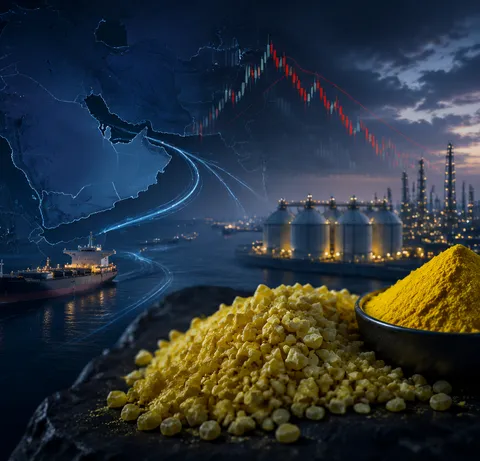
On the raw material side, the recent U.S.-Iran conflict has escalated sharply, with both sides launching multiple rounds of reciprocal attacks. The previously reached shipping memorandum of understanding is close to becoming ineffective, and shipping risks in the Strait of Hormuz have increased sharply, disrupting expectations for global seaborne sulfur supply. This has continued to provide cost and sentiment support to the domestic sulfur market. Domestic sulfur prices fluctuated firmly at high levels with divergent trends, while port inventories remained low. Sulfuric acid prices fluctuated at high levels, and phosphate rock prices remained firm at high levels. Cost-side pressure continued to increase, and enterprises maintained a strong willingness to hold prices firm.
Overall, supported by costs and pending orders, the monoammonium phosphate market is expected to remain stable at high levels in the short term. Going forward, attention should be paid to raw material price trends, the pace of downstream compound fertilizer autumn preparation, and the impact of sulfur market movements on cost transmission following the signing of the U.S.-Iran agreement.
Diammonium Phosphate Price Index
According to FDD data, on July 9, the domestic mainstream diammonium phosphate 64% granular index stood at 4,571.67, flat from the previous working day; the 60% brown index stood at 4,350.00, flat from the previous working day; and the 57% content index stood at 4,432.50, flat from the previous working day.
Diammonium Phosphate Market Analysis and Forecast
Today, the domestic diammonium phosphate market continued to operate steadily.
On the enterprise side, some producers mainly focused on shipping previous pending orders, with no significant changes in market prices. Market sentiment toward holding prices firm remained strong, and actual transactions continued to be negotiated.
On the market side, wait-and-see sentiment remained strong.
On the demand side, performance remained relatively muted. Demand is still in the traditional fertilizer-use gap period, and domestic autumn sowing preparation has not yet started on a concentrated basis. Downstream compound fertilizer plants are mostly operating at low rates, with procurement limited to small-volume daily rigid-demand replenishment. Grassroots distributors remain strongly wait-and-see, and overall trading activity is stagnant and relatively light.
On the raw material side, the recent U.S.-Iran conflict has escalated sharply, with both sides launching multiple rounds of reciprocal attacks. The previously reached shipping memorandum of understanding is close to becoming ineffective, and shipping risks in the Strait of Hormuz have increased sharply, disrupting expectations for global seaborne sulfur supply. This has continued to provide cost and sentiment support to the domestic sulfur market. Domestic sulfur prices fluctuated firmly at high levels with divergent trends, while port inventories remained low. Sulfuric acid prices fluctuated at high levels, and phosphate rock prices remained firm at high levels. High raw material prices continued to increase cost pressure, providing strong support to the market.
Overall, the diammonium phosphate market is expected to continue high-level consolidation in the short term. Going forward, attention should be paid to raw material price changes, downstream demand follow-up, and later export policy adjustments.
Sulfur Market Prices
According to FDD data, on July 9, the domestic Zhenjiang Port granular sulfur price stood at 8,900.00, flat from the previous working day; Dafeng Port granular sulfur stood at 8,880.00, flat from the previous working day; Zhenjiang Port powder/block sulfur stood at 8,850.00, flat from the previous working day; Dafeng Port powder/block sulfur stood at 8,830.00, flat from the previous working day; East China solid sulfur stood at 9,030.00, flat from the previous working day; and East China liquid sulfur stood at 8,905.00, up 0.34% from the previous working day.
Sulfur Market Analysis and Forecast
Today, the domestic sulfur market generally showed high-level fluctuations, regional divergence, and clear long-short competition. Supported by U.S.-Iran geopolitical disruptions and tighter supply caused by maintenance at East China refineries, the market center moved slightly higher and some regional trading improved. However, under high price levels, downstream procurement remained cautious, and the overall market lacked momentum for either a clear rise or decline, remaining in a stalemate.
Externally, renewed volatility in the U.S.-Iran geopolitical situation disrupted expectations for the seaborne supply chain, providing macro support to domestic sulfur prices and lifting bullish sentiment. On the domestic supply side, structural positives remain. Maintenance at East China refineries has tightened regional supply, while downstream rigid demand has provided a floor, and procurement activity has improved noticeably compared with the previous period.
By region, imported granular sulfur prices rose slightly, but attention at ports was diverted by industry meetings. There were no effective morning offers, and trading was light. Domestic liquid sulfur performed firmly. The Shandong market continued to rebound, auction prices operated at high levels, and supply was generally stable. However, downstream cost pressure increased, high-price transactions faced resistance, and the market entered stalemate consolidation.
In Northwest China, market sentiment improved. Shipments in Shaanxi and Inner Mongolia recovered, the transaction center for low-priced cargoes moved upward, and auction prices edged higher, providing strong support to the market. In Northeast China, liquid sulfur prices remained stable and operated smoothly.
Overall, the market showed a pattern of improvement in Northwest and East China, weakness at ports, and high-level stalemate in Shandong.
In the short term, the sulfur market is expected to continue high-level consolidation with narrow-range fluctuations. Momentum for a unilateral rise or fall is insufficient, and long-short competition will continue to dominate. Support mainly comes from sentiment and cost support driven by geopolitical uncertainty, combined with a short-term supply gap from East China refinery maintenance that is difficult to repair quickly, continued downstream rigid-demand support, and steady increases in Northwest shipments and auction prices. Market bottom support remains solid, and room for a sharp decline is limited.
Overall, the short-term sulfur market is expected to fluctuate within a high-level range, with no clear unilateral trend. Going forward, attention should be paid to changes in the U.S.-Iran geopolitical situation, transaction performance for liquid sulfur and port cargoes, the progress of East China refinery maintenance, and downstream restocking pace. These factors will guide short-term market direction.
Phosphate Fertilizer Market Updates
July 9: In the Anhui MAP market, 55% powder was quoted at around RMB 4,530-4,550/tonne delivered, with quotations stable.
July 9: In the Northeast MAP market, 55% powder was quoted at around RMB 4,250-4,250/tonne delivered, with quotations stable.
July 9: In the Henan MAP market, 55% powder was quoted at around RMB 4,530-4,550/tonne delivered, with quotations stable.
July 9: In the Hubei MAP market, mainstream ex-factory prices for 55% powder were around RMB 4,200-4,450/tonne, with quotations stable.
July 9: In the Jiangsu MAP market, 55% powder was quoted at around RMB 4,520-4,500/tonne delivered, with quotations stable.
July 9: In the Shandong MAP market, delivered quotations for 55% powder were around RMB 4,530-4,500/tonne, with quotations stable.
July 9: In the Sichuan MAP market, delivered quotations for 55% powder were around RMB 4,300-4,350/tonne, with quotations stable.
July 9: In the Yunnan MAP market, ex-factory prices for 55% powder were around RMB 4,250-4,300/tonne, with quotations stable.
July 9: In Shaanxi, 60% DAP self-pickup ex-factory quotations were RMB 4,300-4,350/tonne, with quotations stable.
July 9: In Northeast China, 64% DAP self-pickup ex-factory quotations were RMB 4,550-4,600/tonne, with quotations stable.
July 9: In Hebei, 57% DAP self-pickup quotations were RMB 4,420-4,500/tonne, with quotations stable.
July 9: In Hubei, 64% DAP self-pickup ex-factory quotations were RMB 4,800-4,850/tonne, with quotations stable.
July 9: In Shandong, 64% DAP self-pickup ex-warehouse quotations were RMB 4,900-4,980/tonne, with quotations stable; 57% self-pickup station quotations were RMB 4,450-4,500/tonne, with quotations stable.
-
September 14 Urea Daily Review: Export Rumors Disturb Market Sentiment, Urea Market Consolidates Narrowly6199
-
September 14 Phosphate Fertilizer Daily Review: Cost Support Weakens Marginally, MAP and DAP Consolidate Under Pressure8658
-
September 14 Pesticide Daily Review: Stabilizing in a Wait-and-See Mode8072
-
September 14 International Fertilizer and Agricultural News6589
-
September 14 International Forex News7200