"2026 Global Seafarers' Health and Rights Blue Book" Released
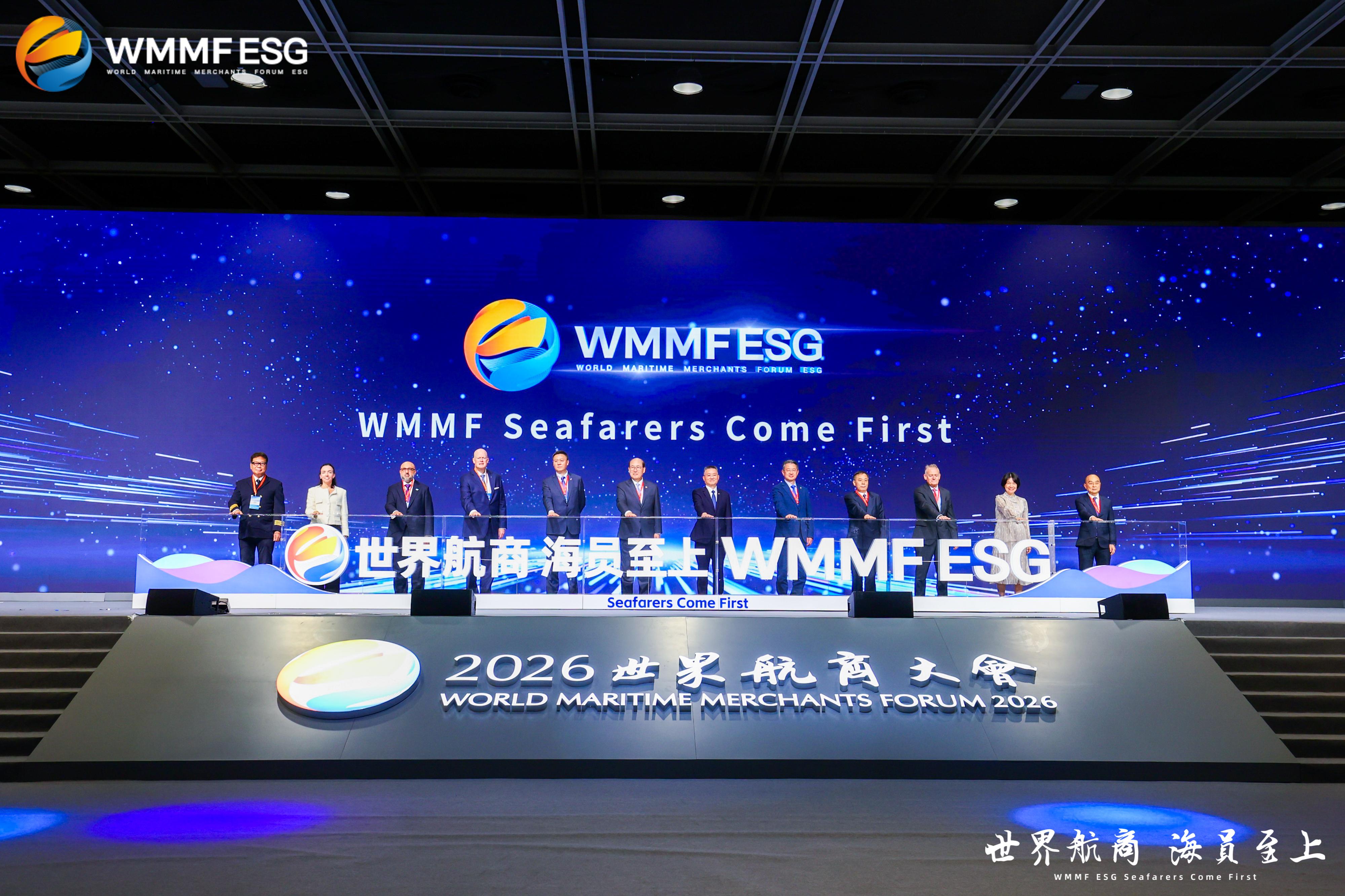
Maritime transport carries about 90% of global trade, maintaining the stable operation of the world economy. The health conditions and rights protection of approximately 2.57 million seafarers globally are directly related to the resilience and safety of the international shipping supply chain. On the 20th anniversary of the adoption of the Maritime Labour Convention, to objectively assess the current state of global seafarer rights protection and promote the effective connection between policy design and implementation, the World Shipping Summit, together with Dalian Maritime University, the China Shipowners Association, the International Union of Marine Insurance, the Hong Kong Shipowners Association, the Hong Kong Seafarers Union, and other international industry organizations, as well as the China Classification Society and the Norwegian Classification Society, officially released the "2026 Global Seafarer Health and Rights Blue Paper" (referred to as the "Blue Paper") in Hong Kong on November 16. The report, based on a global perspective, systematically identifies weaknesses in the field of seafarer rights protection and health support and provides robust data support and references for improving the international maritime labor governance system.
The "Blue Paper" focuses on critical dimensions such as fair employment, work and rest, living conditions, health and psychological support, social security, and career development. It employs a multi-dimensional research method combining company surveys, large-scale seafarer surveys, and in-depth interviews to comprehensively and systematically assess the global state of seafarer health and rights protection. Utilizing nearly 5,000 seafarer questionnaires and 65 company questionnaires globally—with the design and collection process garnering the attention and responses of nearly 200 industry organizations, renowned companies, related professional institutions, and over 10,000 seafarers from various countries—after cleaning the samples, empirical data from 4,445 valid seafarer responses and 37 shipping company surveys were analyzed to systematically uncover the gap between policy compliance and actual implementation.
Propose Categorized Action Directions to Focus on Practical Effectiveness
The report objectively reveals structural risks in the current protection of seafarers' rights. Data show that the high workload at ports and intensive work schedules caused some surveyed seafarers to experience violations of work and rest time regulations during voyages, with senior deck officers being particularly affected. Due to port restrictions and working pace constraints, some seafarers were unable to take shore leave during the entire contract period. Additionally, in areas such as improper recruitment fees, unreported work injuries, private shore-based medical insurance, and family support, there is still a significant gap between the formal institutional coverage and the actual perceptions of seafarers.
Grounded in the gap between policy and practice, the Blue Paper proposes categorized action directions to push seafarer rights protection from policy text to practical effectiveness. First, companies can further fulfill their main responsibilities by addressing frontline execution bottlenecks, such as implementing zero recruitment fee agreements, regulating shift change delays, scientifically allocating crew based on actual workload, setting digital work boundaries, and improving medical services, as well as providing special protection for female seafarers and family care extensions. Secondly, multilateral regulatory collaboration can strengthen cross-border protection networks, such as dynamically optimizing crew deployment rules in flag states, improving access to shore-based welfare benefits in port states, and addressing cross-border social security application difficulties in labor-sending countries. Thirdly, industry collaboration can consolidate a long-term foundation, including incorporating psychological safety and anti-harassment measures into seafarer training, promoting inclusive protection as an industry standard, establishing long-term research and evaluation mechanisms, and addressing new challenges posed by shipping decarbonization and ship automation, with measurable indicators to ensure decent labor and sustain the development of the shipping workforce.
Bridging Implementation Gaps, Driving Industry Co-Governance
The value of the Blue Paper lies in breaking the previous paradigm of single-perspective institutional evaluation. For seafarers, it helps them understand their legal rights and the channels for accessing onboard support resources. For companies, the research results allow them to examine their own protection measures, optimize shift arrangements, improve onboard environments, mitigate fatigue risks, and enhance talent retention rates. For policymakers, comparing institutional requirements, corporate practices, and seafarer experiences helps pinpoint blockages and challenges in implementation. The report, serving as a credible industrial analysis, drives regulatory bodies, port authorities, shipping companies, and social organizations to collaborate in bridging the gaps in institutional execution and also provides baseline data and references for the implementation of amendments to the Maritime Labour Convention.
As an industry report that connects international compliance standards with frontline practical ecosystems, the Blue Paper demonstrates significant advantages in research paradigms and action guidance. Its core feature is embodied in a unified analytical framework:
The Blue Paper breaks through the limitations of unidirectional evaluation by creatively constructing dual perspectives that encompass both "corporate management arrangements" and "individual seafarer experiences." This organic integration of macro governance structures and micro individual experiences offers a comprehensive depiction of the grassroots realities of policy implementation, providing robust bidirectional data support for accurately analyzing the global sea labor market.
Moving beyond a singular evaluation of labor conditions, the Blue Paper systematically builds a three-dimensional assessment encompassing physical health, psychological well-being, and overall welfare. Not only does the report meticulously examine the availability and adequacy of statutory rights such as contractual wages, working and rest hours, and shore leave, but it also incorporates indicators such as seafarers' sleep quality, musculoskeletal pain, feelings of loneliness, and the World Health Organization's five well-being index to comprehensively capture the integrated living conditions and occupational happiness of modern seafarers.
By adhering to a data-driven and problem-oriented approach, and using multidimensional cross-validation, the report unveils the disparities between formal institutional compliance and actual seafarer experiences. This cross-comparison and causal analysis, based on nationality, rank, vessel type, and employment model, precisely identify deep-rooted issues and targets for improving seafarer rights protection.
Supported by the World Shipping Summit, an important global platform, the shipping industry's ESG (Environmental, Social, and Governance) initiative has consecutively produced a series of branded research outputs over the past three years. Previously, the project team successively released the "Shipping ESG Evaluation Standards" and the "Global Shipping Companies' Net-Zero Pathway Practice Guidelines." The research content has expanded from the ESG evaluation system and decarbonization pathways to in-depth exploration of seafarer rights protection. This provides practical reference points for the industry's sustainable development. Looking ahead, the Blue Paper will continue to promote improvements in seagoing work environments, health and welfare protections, and labor conditions, thereby strengthening the talent foundation for the sustainable development of the shipping industry and achieving its ultimate strategic goal of sustainability.
-
Nantong COSCO Kawasaki was selected for the national leading-level intelligent factory cultivation list.4691
-
November 18 International Shipping Trends6049
-
"2026 Global Seafarers' Health and Rights Blue Book" Released4468
-
Hong Kong Maritime Week 2026 and the 2026 World Maritime Merchants Conference held in Hong Kong3335
-
November 17 International Shipping Trends5593