
The Yangtze River Zhenjiang section has fully implemented the "Six All" digital closed-loop management system for operations involving hazardous chemical vessels.
During the National Day holiday, the transportation of hazardous chemical ships in the Zhenjiang section of the Yangtze River entered a critical period. The Zhenjiang Maritime Safety Administration adhered to the principle of piloting first and promoting across the region, using the Jinhai Hongye Wharf as a model. They fully applied the "six-all" digital closed-loop management system for hazardous chemical ship operations in the Zhenjiang section of the Yangtze River, implementing upgraded management requirements directly to the ship-shore frontline and individual posts to ensure stable water safety during this critical period.
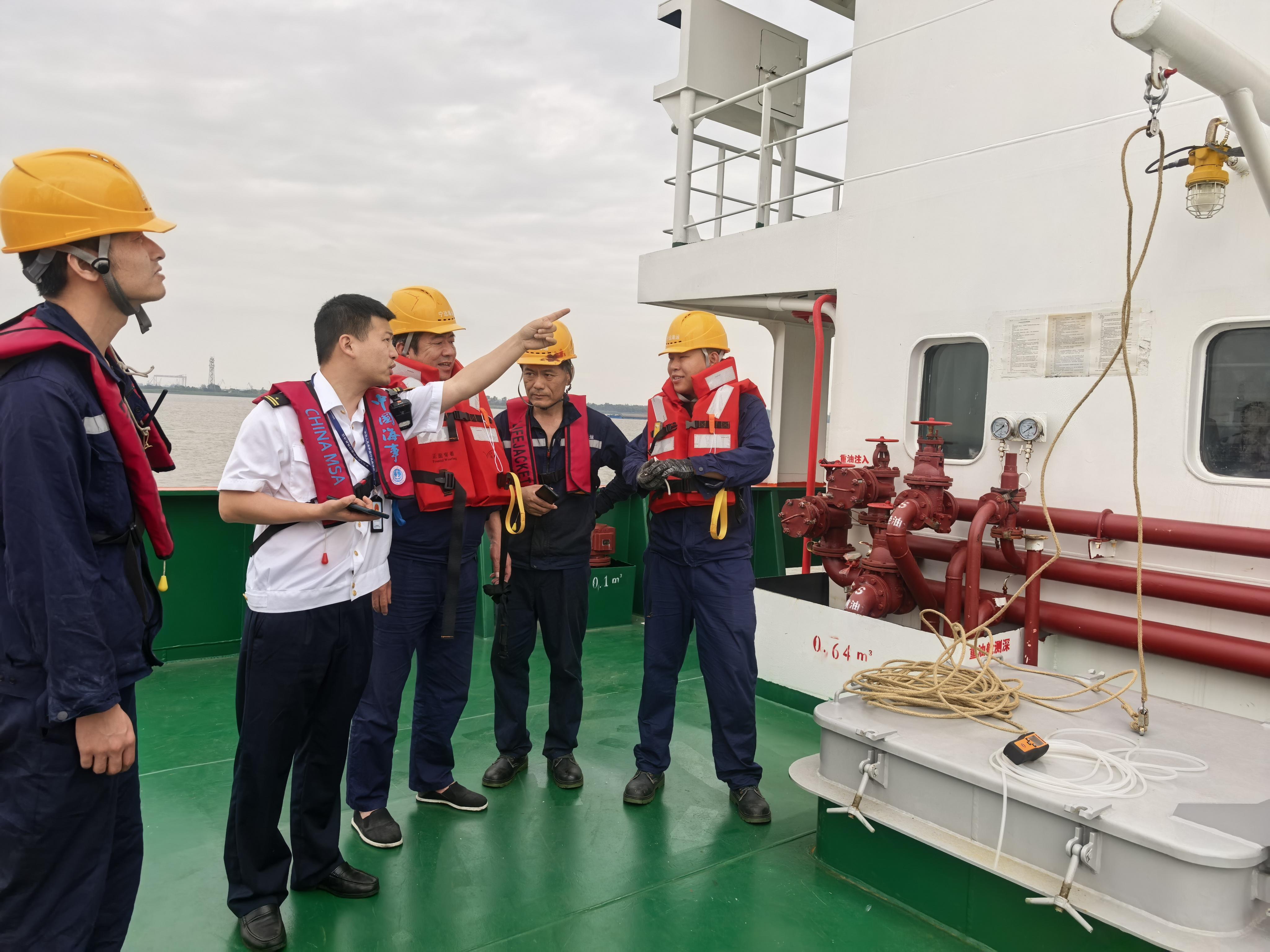
This system originated from pilot practices. Operations of bulk liquid hazardous chemical ships involve long chains and multiple risk points. Before the pilot implementation, Jinhai Hongye Wharf faced challenges such as fragmented operation management, superficial implementation of duty procedures by dockmasters and pre-operation briefings, frequent errors in paper records, unclear job responsibilities, and difficulties in tracing hazards. Addressing these pain points, the Zhenjiang Maritime Safety Administration guided the wharf to independently develop a safety operation management mini-program that integrates maritime regulations and enterprise standards. This strictly implements the dockmaster's duties and pre-operation briefing procedures, streamlines the full operational cycle of hazardous chemical ships — including arrival forecasting, port operations, loading and unloading management, in-port supervision, departure inspection, and archiving and tracing. This drove five major transformations in safety management: implementing systems from "on paper" to "on ground," shifting operation management from "fragmented" to "integrated," transforming record keeping from "paper-based" to "digital," addressing hazards from "open-loop" to "closed-loop," and moving job responsibilities from "ambiguous" to "precise."
Based on the pilot program, the Zhenjiang Maritime Safety Administration developed the "six-all" work system and promoted it in the Zhenjiang section of the Yangtze River. This system prioritizes uniform standards by integrating maritime regulations and enterprise internal controls into online standardized processes, unifying ship-shore operation management benchmarks. It employs seamless workflows to cover the entire operational cycle, from ship arrival forecasts to final data archiving, ensuring no blind spots in a closed-loop process. Responsibility coverage ensures "job-specific tasks, person-specific roles, and full accountability," enforcing safety responsibility at every level to individuals. Traceability is guaranteed through a model of "task execution + evidence upload + hierarchical review + closed-loop rectification," ensuring operations can be traced and duty performance verified. Supported by digital tools replacing traditional paper records, operation data is automatically aggregated to create analytical reports, transitioning safety management from experience-based practices to precise and intelligent operations. The system builds a regulatory closed-loop with pre-warning, real-time control, and post-event tracing for ensuring ship-shore safety management.
Considering the characteristics of the National Day holiday, such as dense ship flows, complex weather conditions, and increased personnel fatigue, the Zhenjiang Maritime Safety Administration deeply integrated the "six-all" system with upgraded control measures for critical periods. Before the holiday, they organized comprehensive inspections of hazardous chemical terminals in their jurisdiction, urging dockmasters to fulfill their responsibilities and implement pre-operation briefing systems online. During the holiday, they elevated the review and approval levels for ship arrival forecasts and operations, conducting upgraded approvals, double reviews, and supervisory shifts for night operations, operations during adverse weather, and loading and unloading high-risk cargoes. Key steps such as deploying and removing oil booms, submitting pollutants, and departure inspections were confirmed online step by step, ensuring no operation proceeds without inspection and no departure occurs without closed-loop completion. For identified hazards, they supervised, rectified, and verified corrections through the mini-program, forming a closed loop of "identification—assignment—rectification—review—closure." Additionally, they strengthened leadership supervision and 24-hour emergency duty arrangements, increased on-site inspections and electronic surveillance, ensuring rapid response and efficient handling of emergencies.
-
The Yangtze River Zhenjiang section has fully implemented the "Six All" digital closed-loop management system for operations involving hazardous chemical vessels.3464
-
Tianjin North Maritime Bureau Escorts "China's Intelligent Manufacturing" to Sail Overseas4440
-
The main tower of the cable-stayed bridge for the Qianjiang Xinglong Hub second-line ship lock project is capped.4629
-
The Port of Tianjin International Cruise Terminal witnessed a “three-ship docking” event on the first day of the National Day holiday, with Tianjin Maritime authorities working tirelessly to support the waterway passenger operations peak.3454
-
September 30 International Shipping Trends5925