Green Sailing Embarks on a New Journey, Intelligent Innovation Shapes the Future: 2026 China Maritime Academic Conference Held in Jining, Shandong
On November 22, 2026, the China Maritime Academic Annual Meeting was held in Qufu, Shandong. The conference was co-hosted by the China Maritime Institute and Shandong Ronghui Group, organized by the Shandong Port and Inland Waterway Economic Research Institute, and supported by the Shandong Maritime Society. The attendees focused on the theme "Green Navigation and Intelligent Innovation for the Future," exchanging academic ideas, sharing scientific research achievements, building consensus on development, and discussing paths toward high-quality development of maritime undertakings.
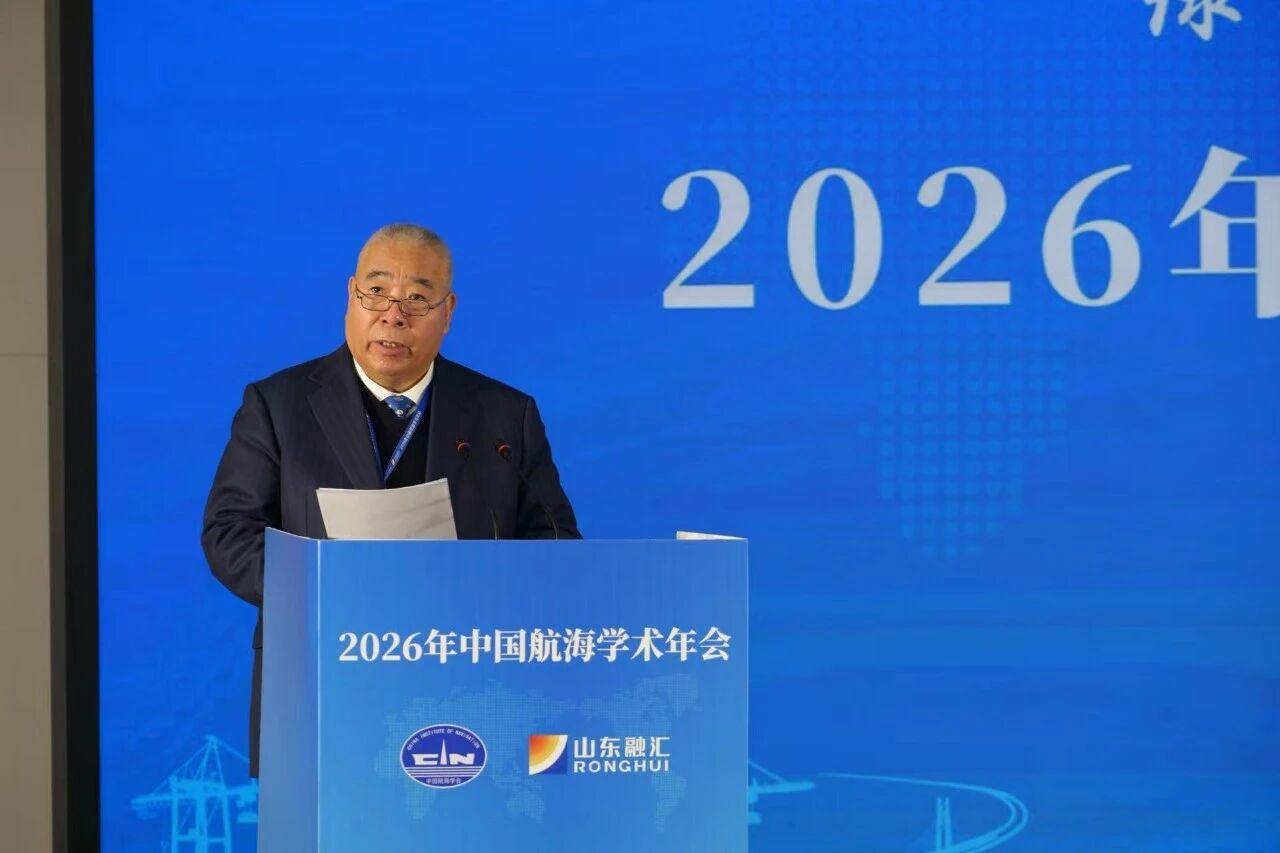
The conference was chaired by Li Shixin, Executive Vice President of the China Maritime Institute. Attendees included former Minister of Transportation Huang Zhendong, former Vice Minister of Transportation and President of the 9th Council of the China Maritime Institute He Jianzhong, President of the China Maritime Institute Yan Xiping, Deputy Secretary of the Party Committee, Director, and General Manager of Shandong Ronghui Group Wang Chongjing, and Vice Presidents of the China Maritime Institute Wang Lei, Zhang Baochen, Dai Mingxin, and Zhang Qingwen. Other attendees included Huang Youfang, Honorary President of the Shandong Port and Inland Waterway Economic Research Institute and President of the 8th Council of the China Maritime Institute, Pan Haitao, Executive General Manager of the Market Development Division at China Communications Construction Group, as well as leaders and experts from maritime colleges, research institutions, and large enterprises, representatives from local maritime societies and professional committees of the China Maritime Institute, and award recipients and academic paper authors.
The Ministry of Transportation has successively issued documents such as the "Intelligent Shipping 2030 Action Plan," the "Action Plan for Promoting and Applying New Energy Ships on Inland Waterways," and the "Guidelines for the Application of Artificial Intelligence in the Water Transport Sector," clearly aiming to foster new productivity in the maritime field through technological innovation. This will promote the coordinated development of green and intelligent ships, smart waterways and ports, and intelligent navigation aids. Globally, shipping channels have transitioned from being merely essential public service facilities underpinning world trade operations to tools for competition among major powers. The global governance framework for shipping is undergoing profound adjustments, and the rules for green and low-carbon shipping are being reshaped. Behind the contest over rules lies the competition in industrial competitiveness and international discourse power. Green transformation and intelligent upgrades are no longer "optional questions" but mandatory responses that must be successfully addressed.
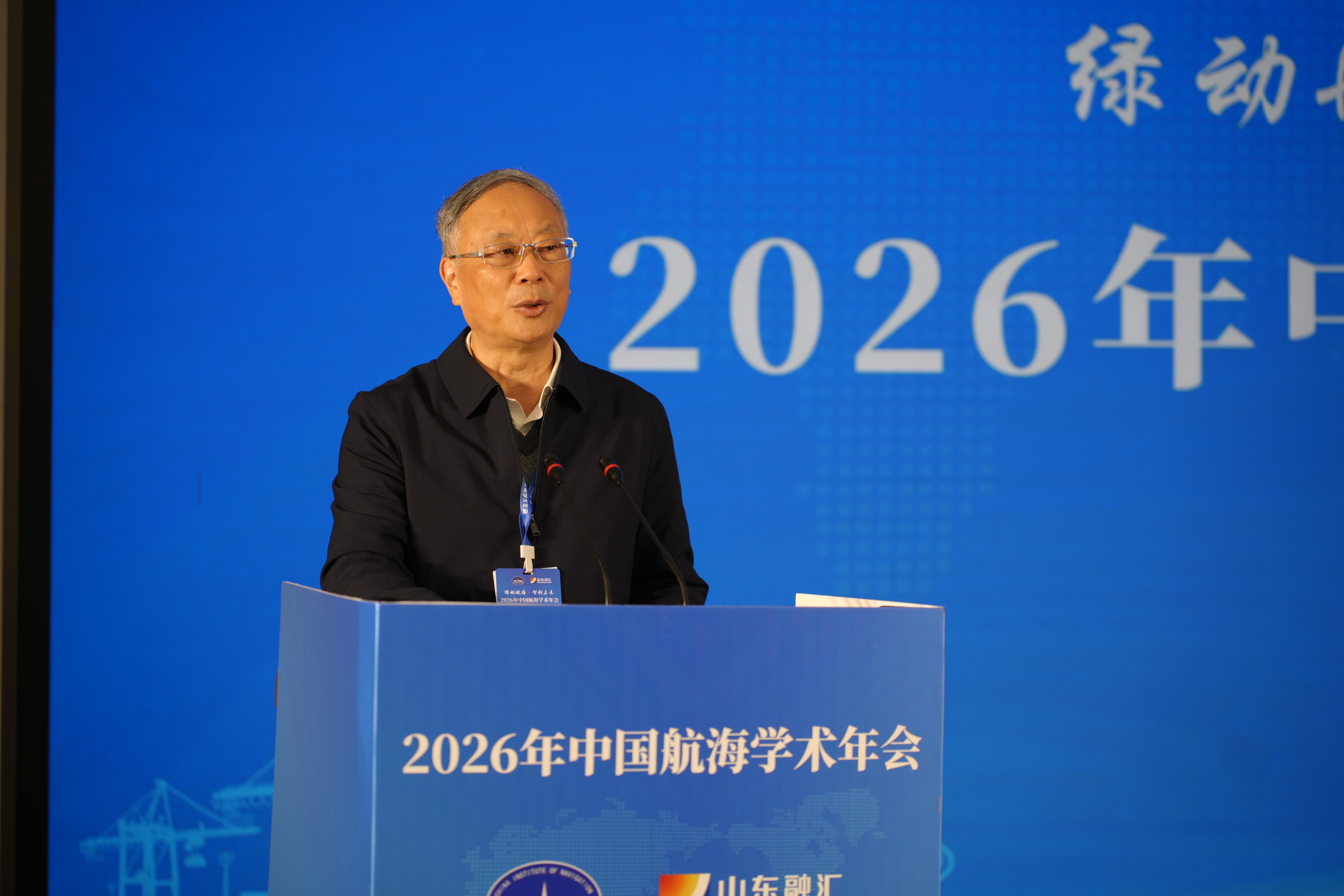
Yan Xiping emphasized the importance of focusing on the theme and grasping the trends of green and smart development in waterway transportation. "Green movement" and "intelligent creation" support and interconnect with one another, forming two main threads of transformation in the water transportation system. In terms of green transformation, emission reductions in water transport have progressed from "single vessel retrofitting" to "systemic restructuring." Currently, there are over 1,300 new energy vessels in China, with shore power coverage at specialized berths exceeding 90%. The country has planned around 5,000 kilometers of zero-carbon water transportation corridors, forming a "four horizontal, four vertical, and two network" layout, based on the Yangtze River, Xijiang River, the Grand Canal, as well as channels in the Yangtze River Delta and Pearl River Delta. Ships in water network areas will prioritize electrification, with methanol as the primary propulsion for vessels in the main streams of the Yangtze and Xijiang Rivers. Concurrently, integrated development of ships, ports, and energy supply stations is progressing. On the front of intelligent upgrades, waterway intelligence is advancing from auxiliary decision-making to ship-shore collaboration, human-machine cooperation, autonomous navigation, and remote driving. The next-generation shipping system is centered on the "navigation brain," supported by "integrated driving machines." Onboard functionalities evolve iteratively from enhanced and assisted driving to autonomous operation, while shore-based functionalities implement hierarchical monitoring, remote control, and driving management. With the promotion of the "shore-based driving and vessel standby" concept, vessel navigation modes are gradually evolving.
Yan Xiping stated that academic leadership must be strengthened to advance the integration of science, education, and talent. The China Maritime Institute continues to build multi-level, high-level, and specialized academic platforms. By supporting initiatives like the Youth Support Project and the Excellent Doctoral Thesis Incentive Program, it empowers young science and technology workers to take on important roles. For the "15th Five-Year Plan," the institute aims to closely align with cutting-edge directions in intelligent, green, and resilient shipping. It strives to build a world-class maritime institute, contributing intelligent efforts to the establishment of a powerful nation in transportation, shipping, and marine industries.
Wang Chongjing, Deputy Secretary of the Party Committee, Director, and General Manager of Shandong Ronghui Group, stated that Ronghui Group has transitioned from a single coal enterprise to a state-owned enterprise integrating energy, port and shipping logistics, and equipment manufacturing. The group has propelled Jining Port to become the first inland river megaport in northern China. Looking ahead, the group will adhere to principles of ecological priority, innovation-driven development, and open cooperation. It aims to become a model for green shipping, a leader in intelligent shipping innovation, and a promoter of collaborative innovation. The group will focus on cutting-edge technologies to drive the convergence of innovation and industrial chains, creating a replicable and scalable "Jining model" for inland shipping development while opening up application scenarios and inviting all stakeholders to participate in the transformation of its achievements.
Huang Youfang, Chairman of the Shipping 50 Forum and Honorary President of the Shandong Port and Inland Waterway Economic Research Institute; Pan Guang, Dean of the School of Navigation at Northwestern Polytechnical University and Deputy Director of the Soaring Laboratory; Liu Fushun, Vice President of Changsha University of Science & Technology and Deputy Dean of the College of Engineering at Ocean University of China; and Liu Jiancheng, Chief Engineer of CSSC Shipping Industry Group, each delivered keynote speeches. Their topics included "Resilience and Security of Maritime Supply Chains," "Critical Thoughts on Underwater Unmanned Systems Technology," "High-quality Development and Innovative Capacity in Marine Engineering," and "Progress and Challenges in Deep-sea Mineral Resource Development," offering cutting-edge insights and technological advancements in the areas of supply chain security, underwater equipment, marine engineering, and deep-sea resource exploration.
Presentations of the top awards began with a discussion of major engineering practices. Zhu Xiaodong, a senior engineer from the Shanghai Salvage Bureau of the Ministry of Transportation, introduced the 2025 Special Prize of the China Maritime Science and Technology Awards project, "Key Technologies and Applications for Efficient and Non-Destructive Recovery of Sunken Ships Underwater." Another special award-winning project focused on ensuring the centennial safety of cross-sea bridges. Lu Jun, Deputy Director of the Materials and Structures Research Institute at Nanjing Hydraulic Research Institute, represented his team to introduce the "Research and Major Engineering Practice on Key Technologies for Enhancing the Disaster Resilience of Centurial Cross-Sea Bridges."
Innovation results from frontline enterprises were equally spotlighted. Ning Wu, Chief Researcher at Guangxi Beibu Gulf International Port Group Co., Ltd., and winner of the 2026 China Maritime Science and Technology Innovation (Individual) Award, introduced innovations in the intelligent expansion of the Xijiang ship lock cluster and the key technologies for suppressing LNG ship emissions, as well as their engineering applications. Meanwhile, young science and technology workers focused on green and intelligent marine engineering equipment. Zhou Ying, Technical Manager at CCCC Shanghai Waterway Bureau Co., Ltd., and recipient of the 2026 China Maritime Young Science and Technology Award, introduced a study on energy-saving technologies and engineering applications for large-scale LNG low-carbon-powered intelligent marine engineering equipment.
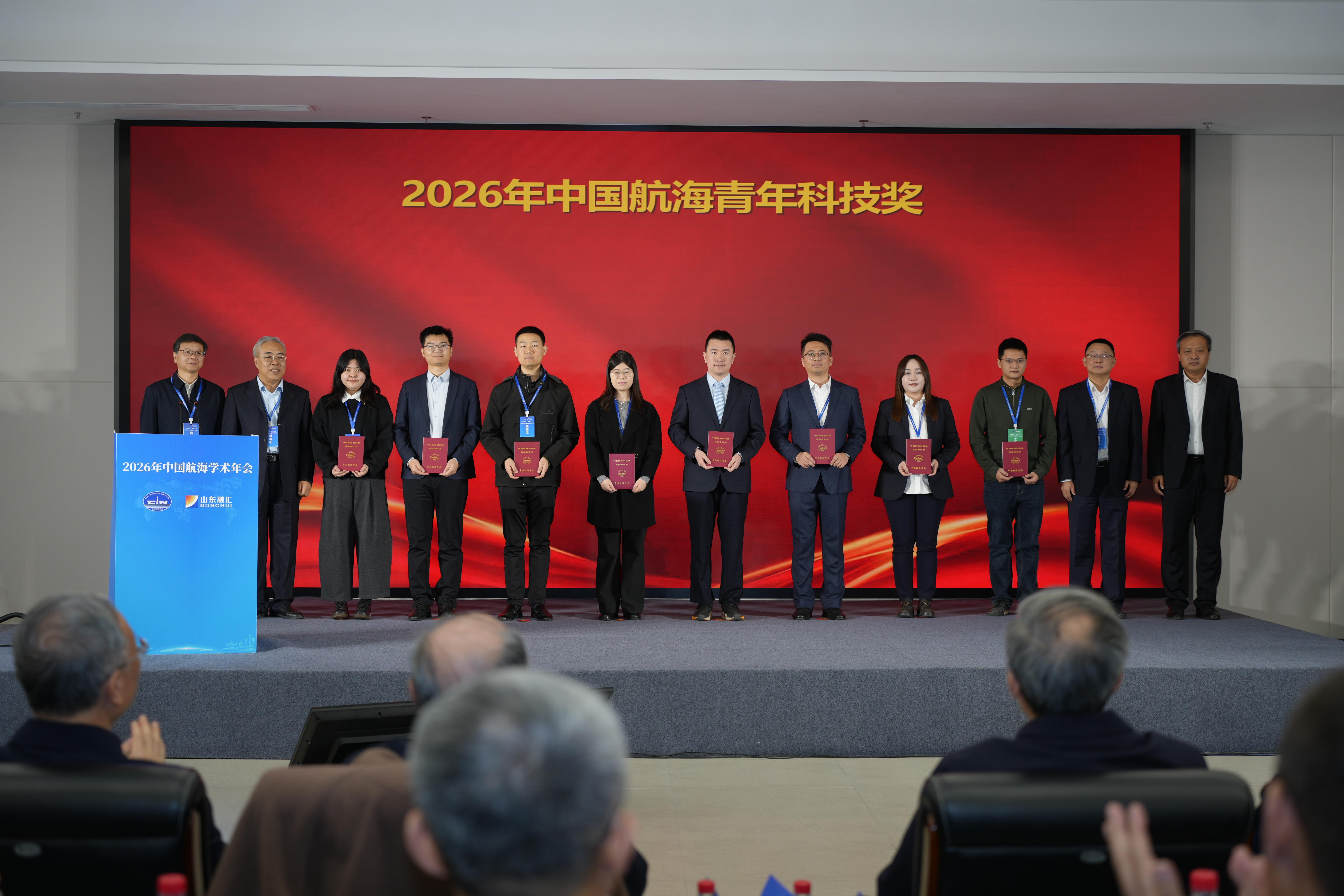
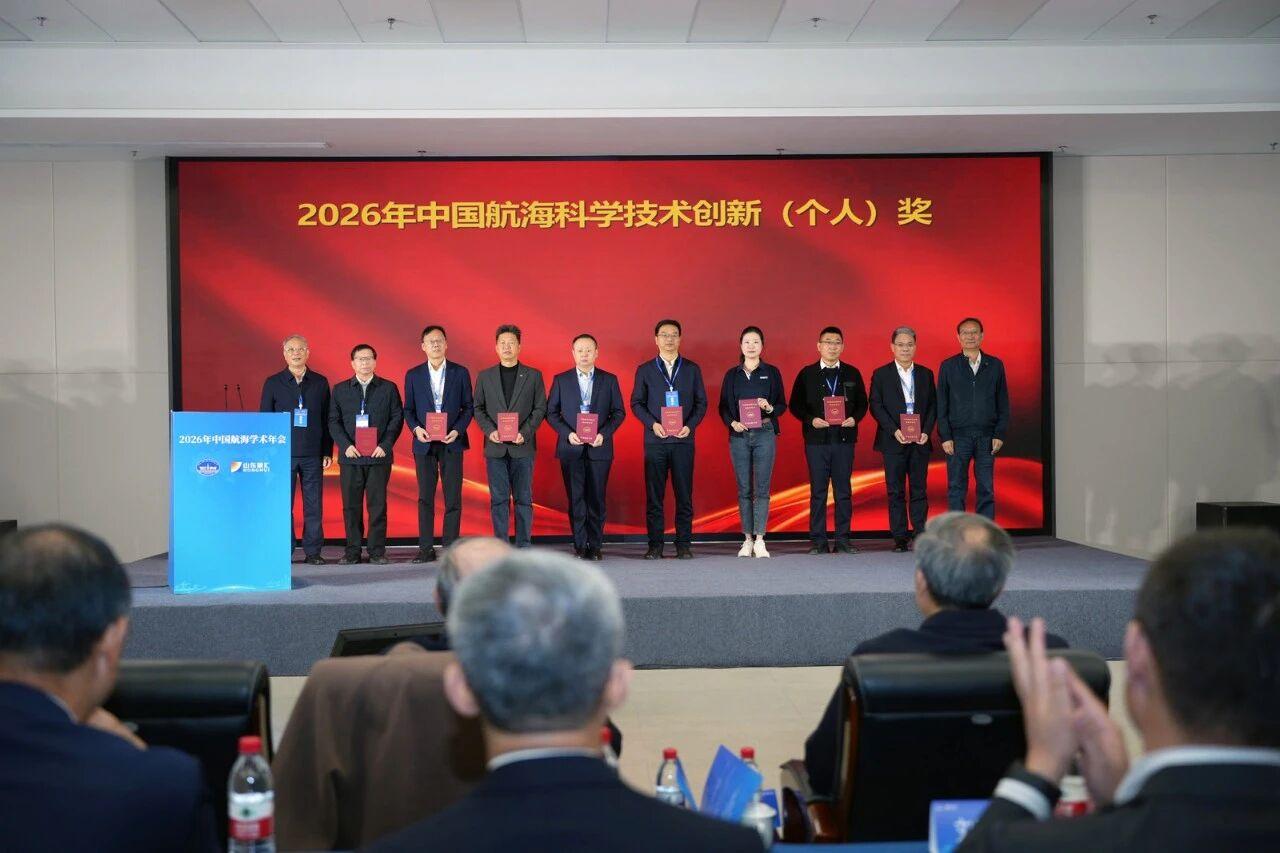
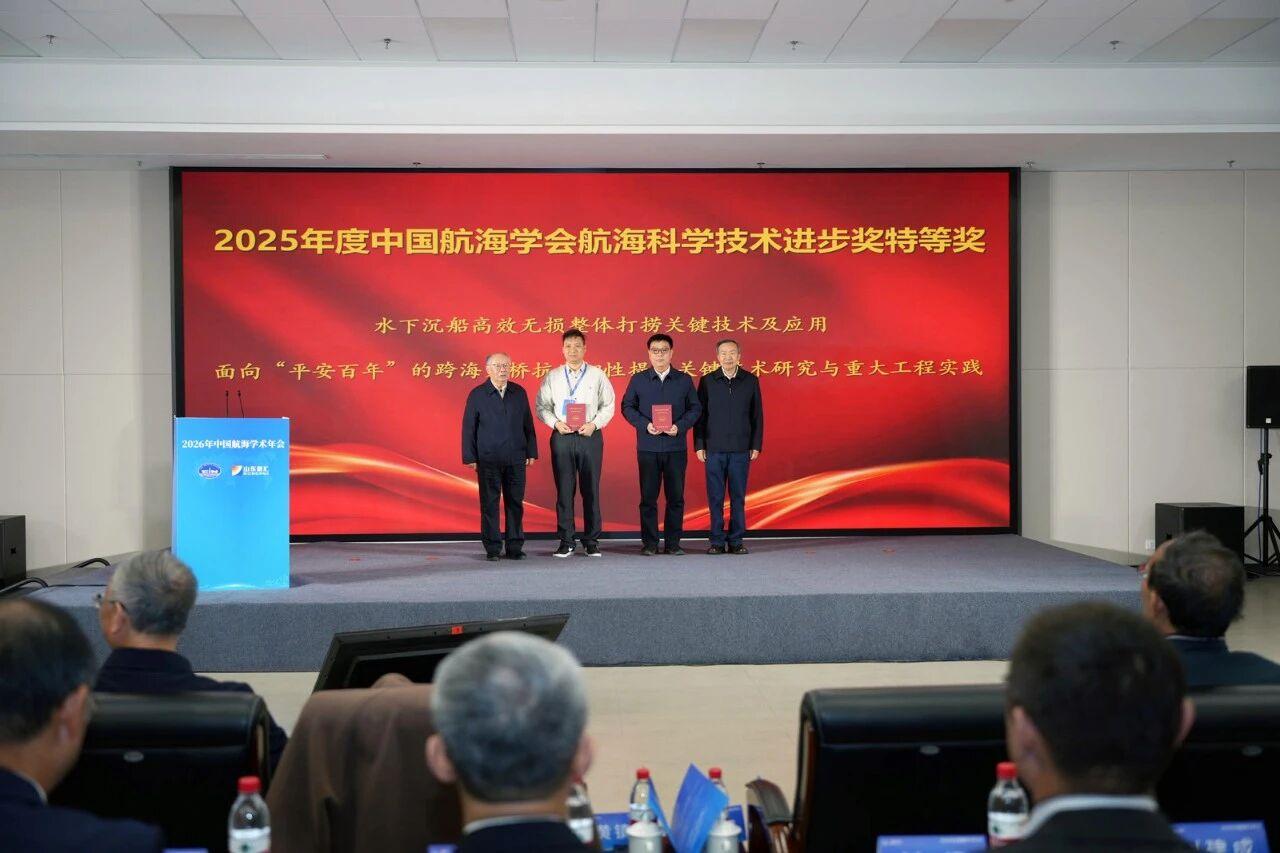
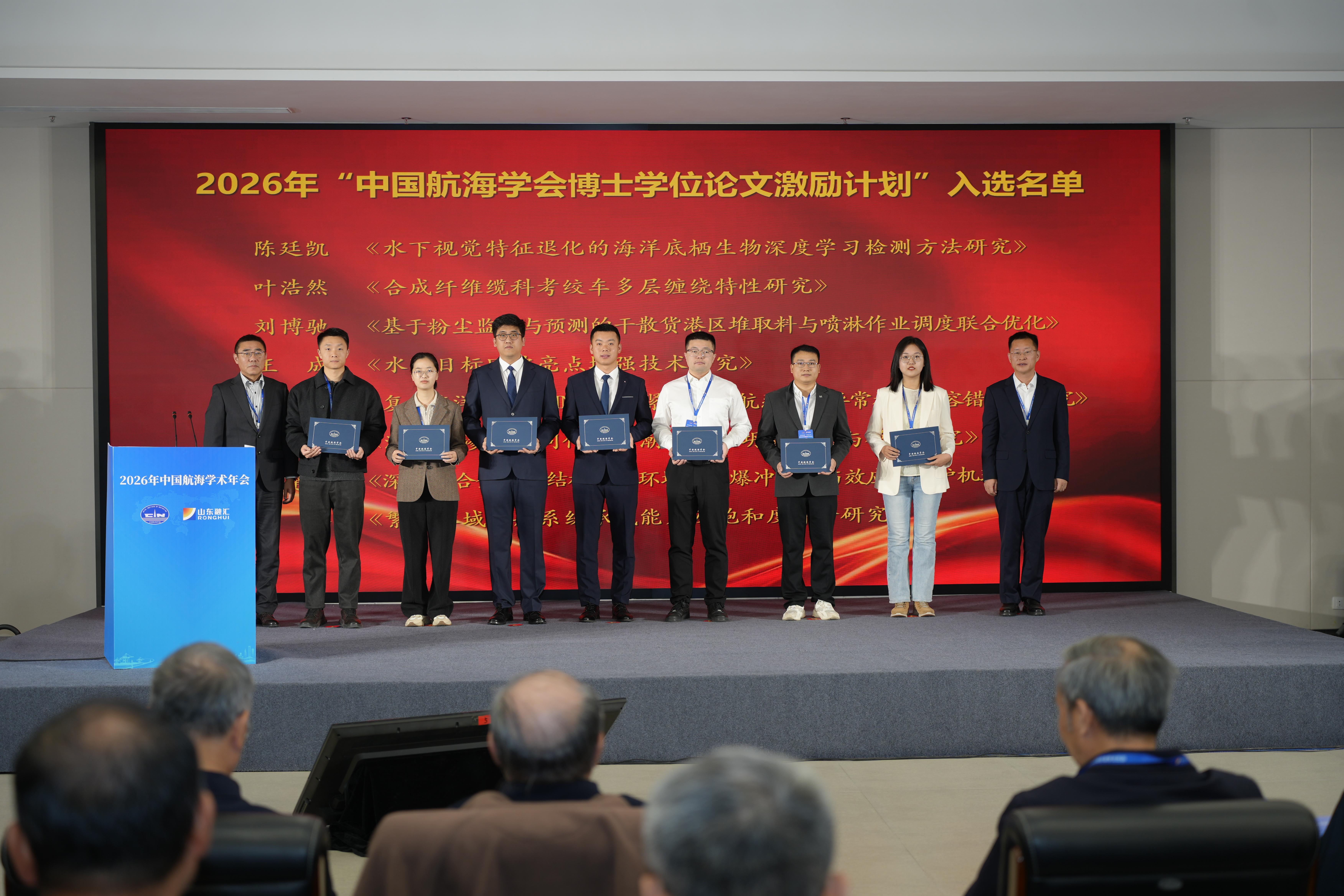
The conference announced the winners of the "2026 China Maritime Young Science and Technology Award," the "2026 China Maritime Science and Technology Innovation (Individual) Award," and the "2025 Special Prize for the Progress in Maritime Science and Technology Award" by the China Maritime Institute. Award certificates were presented to the winners. The conference also unveiled the list of conference papers and annual papers for the 2026 China Maritime Academic Annual Meeting. A total of 58 papers were recognized as conference papers, and 43 as annual papers. In the newly implemented "China Maritime Institute Doctoral Thesis Incentive Program," eight doctoral theses were selected following expert review. Additionally, 43 doctoral students were shortlisted for the 2026 "China Association for Science and Technology Young Scientific Talent Training Program Doctoral Student Special Project" through the institute's selection and recommendation.
-
Green Sailing Embarks on a New Journey, Intelligent Innovation Shapes the Future: 2026 China Maritime Academic Conference Held in Jining, Shandong4306
-
The Tianjin Port and Shipping Administration Bureau guarantees LNG unloading operations.4399
-
Nantong COSCO Kawasaki was selected for the national leading-level intelligent factory cultivation list.4748
-
November 18 International Shipping Trends6094
-
"2026 Global Seafarers' Health and Rights Blue Book" Released4733