Sharpening the Sword Against the Wind to Guard the Bay: A Chronicle of Pan Enqin, Captain of Yueqing Bay Maritime Office, Defending Against Typhoon "Saudel"
Yueqing Bay is a semi-enclosed bay with a winding coastline and dense docks, hosting large bulk carriers, hydraulic engineering vessels, and inter-island passenger ferries. When a typhoon strikes, the combined effects of waves and tidal currents in the bay may cause ships to drag anchor or collide, posing significant challenges to the typhoon response and judgment capabilities of grassroots maritime law enforcement personnel.
On August 24, as Typhoon "Saudel," the 18th typhoon of the year, approached the southern coast of Zhejiang, the wind and rain began to show. From early morning, the schedule of Pan Enqin, deputy captain of the Qili Maritime Patrol and Law Enforcement Team of the Wenzhou Maritime Safety Administration, was packed with visits to anchorages, docks, shipyards, and frontline patrols. As a female cadre in a frontline position, she demonstrated both the courage and resilience to face storms and the meticulousness and prudence unique to women.
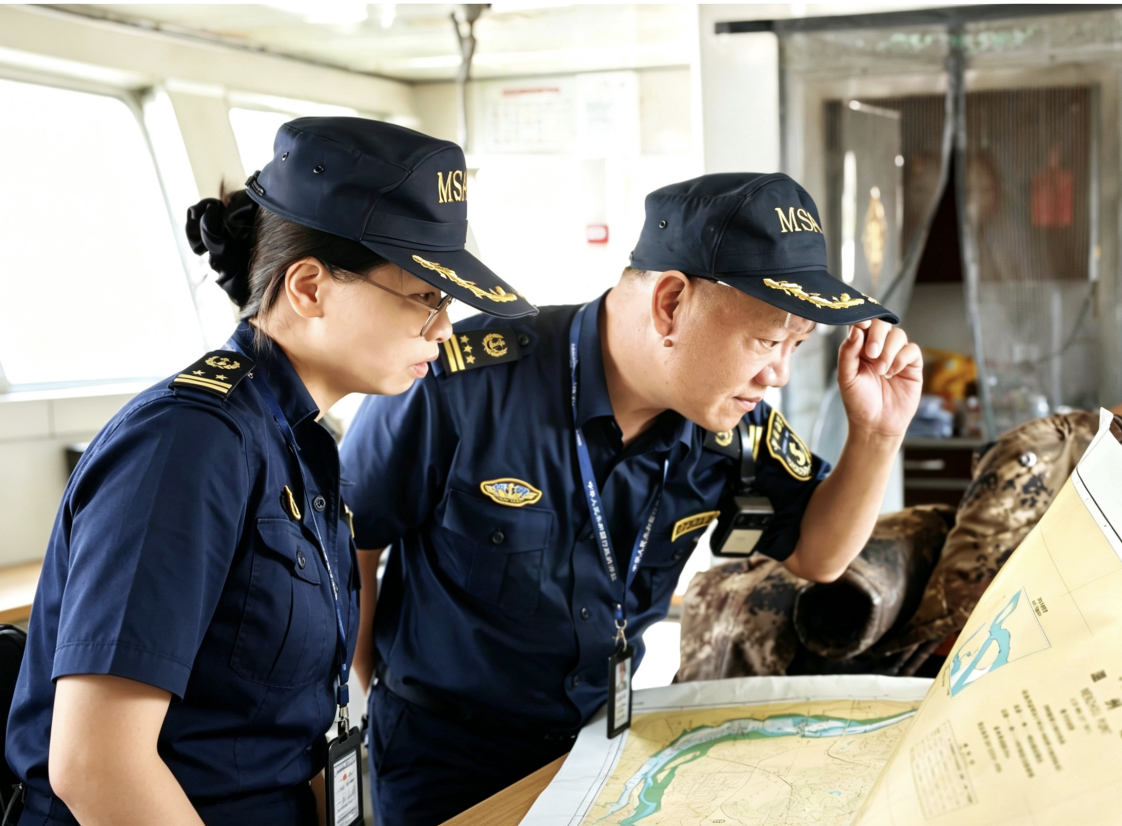
"The conditions in the waters of Yueqing Bay are unique. Large construction vessels have a large windward area, and if they drag anchor, collisions are highly likely. There is no room for luck when it comes to risks." Before setting out, Pan Enqin repeatedly emphasized the risk characteristics of the jurisdiction to the law enforcement personnel. Focusing on multiple hydraulic engineering vessels in the port area, she led a team of business experts to analyze risks for each vessel based on local tidal patterns and anchorage capacity. They implemented a "one ship, one plan" typhoon avoidance strategy, detailing specific safe anchorage points and mandatory standards for personnel evacuation sequences.
On August 25, the maritime patrol boat braved increasing gusts of wind as it navigated through the Qili port area. Pan Enqin led the law enforcement team in conducting another "sea sweep" operation in the jurisdictional waters. They urged vessels to move to safe typhoon shelters, disseminated typhoon prevention regulations, and implemented measures such as sealing cargo holds, reinforcing doors and portholes, and other typhoon precautions. They also pressed docks to cease waterborne operations early and to take full responsibility for typhoon prevention.
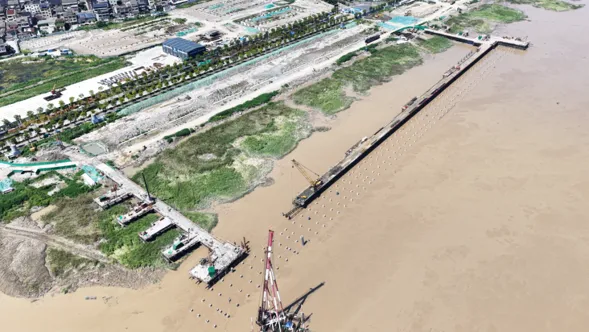
The key vessels docked at the second phase of Huang'ao were her greatest concern. During the window of opportunity before the typhoon warning escalated, she visited the key typhoon shelter areas multiple times. Using drones, she rechecked the mooring status of each vessel and confirmed that all personnel had evacuated before she felt assured enough to return to the team.
"Typhoon prevention requires both on-site inspections and close monitoring of screens." This is a work philosophy that Pan Enqin often shares. On August 26, the Zhejiang Maritime Safety Administration activated a Level I emergency response for typhoon prevention on the water. All hydraulic engineering projects in the jurisdiction were halted, and all inter-island passenger ferry routes were suspended. Pan Enqin divided the team into an on-site patrol group and a smart supervision group, establishing a three-pronged regulatory model of "on-site patrols by maritime patrol boats, aerial inspections by drones, and remote monitoring via the smart maritime platform." Especially during nighttime, low tide, or when maritime patrol boats were restricted from going out to sea, they relied on video surveillance for 24-hour continuous remote inspections. They sent rolling typhoon warnings and tidal risk alerts to vessels in port, addressing blind spots in on-site inspections.
Late at night on the 26th, the lights in the duty room remained bright. During electronic patrols, the track of a cargo ship deviating from its planned route caught Pan Enqin's attention. The ship had not yet entered a safe typhoon shelter area, and with the influence of the typhoon's outer circulation, the time available for the ship to maneuver and avoid danger was rapidly diminishing. Considering the narrow and long approach channel to Yueqing Bay, where strong winds would severely limit the ship's turning and maneuvering space, Pan Enqin immediately used very high frequency (VHF) communication to explain the objective limitations of typhoon shelters in the jurisdiction. She guided the ship to enter a suitable anchorage at the right time. After the call ended, she did not let her guard down, continuing to track the ship's dynamic trajectory until it safely anchored, at which point she recorded the handling details in the duty log.
The passenger transport boats and inland yachts at Guanyin Reef have always been key risk targets for Pan Enqin. Some shipowners lacked awareness of the hazards at their mooring points. While these locations might appear to provide shelter from wind and waves, the interplay of swells and tidal currents, combined with the limited wind resistance of yachts and passenger transport boats, made them highly vulnerable to wind and wave impacts. Faced with shipowners' hesitation and indecision about typhoon shelters, Pan Enqin based her approach on the actual conditions of the waters, avoiding rigid commands and instead opting for patient communication and persuasion. She used past cases of ships dragging anchor or colliding during typhoons to analyze the external forces caused by strong winds combined with tidal changes. By comparing the pros and cons of two options—seeking shelter in a bay or being hoisted ashore—she translated professional risk assessments into straightforward warnings, effectively dispelling the shipowners' complacency. She implemented categorized control measures for passenger transport boats and inland yachts at Guanyin Reef, ensuring targeted risk mitigation measures and addressing water safety risks at their source.
Before the typhoon arrived, Pan Enqin could be seen rushing between the docks, key typhoon shelter areas, bridge zones, and ship repair and construction yards. "This time, Typhoon 'Saudel,' the 18th typhoon, coincides with a spring tide. We must not underestimate the destructive power of the typhoon combined with tidal currents. It is imperative to implement protective measures in advance and ensure that all personnel are evacuated." This was her repeated reminder to every ship, embodying the heavy responsibility of a grassroots maritime official.
From assessing jurisdictional risks to organizing team efforts, from boarding ships at sea for inspections to round-the-clock monitoring using smart technology, from patiently persuading shipowners to closing the loop on handling navigation risks, throughout the entire typhoon defense process, Pan Enqin carried a constant sense of responsibility and took the lead in the frontlines of typhoon defense in Yueqing Bay.
As the strong winds approached, the lights reflected on the vast sea surface. She led the Qili Maritime Patrol and Law Enforcement Team in building a solid defensive line to safeguard maritime safety through meticulous and thorough preemptive measures, exemplifying the mission and responsibility of grassroots maritime personnel.
-
China Classification Society Shanghai Branch Innovatively Conducts 2026 New Employee Orientation Training4883
-
The nation's first lighthouse data intellectual property registration established at Naozhou Lighthouse.4455
-
Tianjin Maritime Bureau visited Yan'an "Young Maritime School" to conduct the "First Lesson" on maritime safety knowledge for the new school term.3404
-
Yangshan Port Maritime Authorities Take Multiple Measures to Ensure the Safe Departure of Thousands of Fishing Vessels4179
-
The first domestic green methanol bunkering operation for an internationally navigating bulk carrier has been successfully completed.4141