Xiamen Maritime Bureau collaborates with port and shipping forces to safeguard the "fishing season."
At 12:00 on August 16, the summer fishing moratorium along the coast of Xiamen ended, and approximately 3,500 marine fishing vessels set out for concentrated fishing. On the same day, the Xiamen Maritime Safety Administration, together with port and shipping units, officially launched the Xiamen Port Integrated Dispatch and Command Center, implementing the Xiamen Port Integrated Dispatch and Command Mechanism. From this point forward, Xiamen's port and shipping forces transitioned from separate cooperation to a new stage of joint problem-solving and deep integration, establishing a multi-layered collision prevention system for commercial and fishing vessels.
Innovative "Many-to-One" Service Model
In the past, a single commercial vessel entering or leaving Xiamen Port had to coordinate individually with nearly 10 port and shipping units, including maritime, port, terminal, and pilotage services. Each unit operated independently, lacking an efficient central command for coordinated operations and emergency response.
"We used this fishing season as an opportunity to bring relevant units, departments, and enterprises into the Xiamen Port Integrated Dispatch and Command Center, pioneering a cross-city, cross-department joint dispatch mechanism in coastal provinces," explained Wu Longle, Deputy Director of the Xiamen Maritime Safety Administration. The Xiamen Port Integrated Dispatch and Command Center brings together maritime, port, navigation safety, port operations, and agency forces to achieve on-site coordination of vessel traffic command, berth allocation, and other functions. This effectively enhances inter-departmental planning, emergency response, and multi-party collaboration, transforming the previous "one-to-many" individual coordination model into a unified "many-to-one" service model.
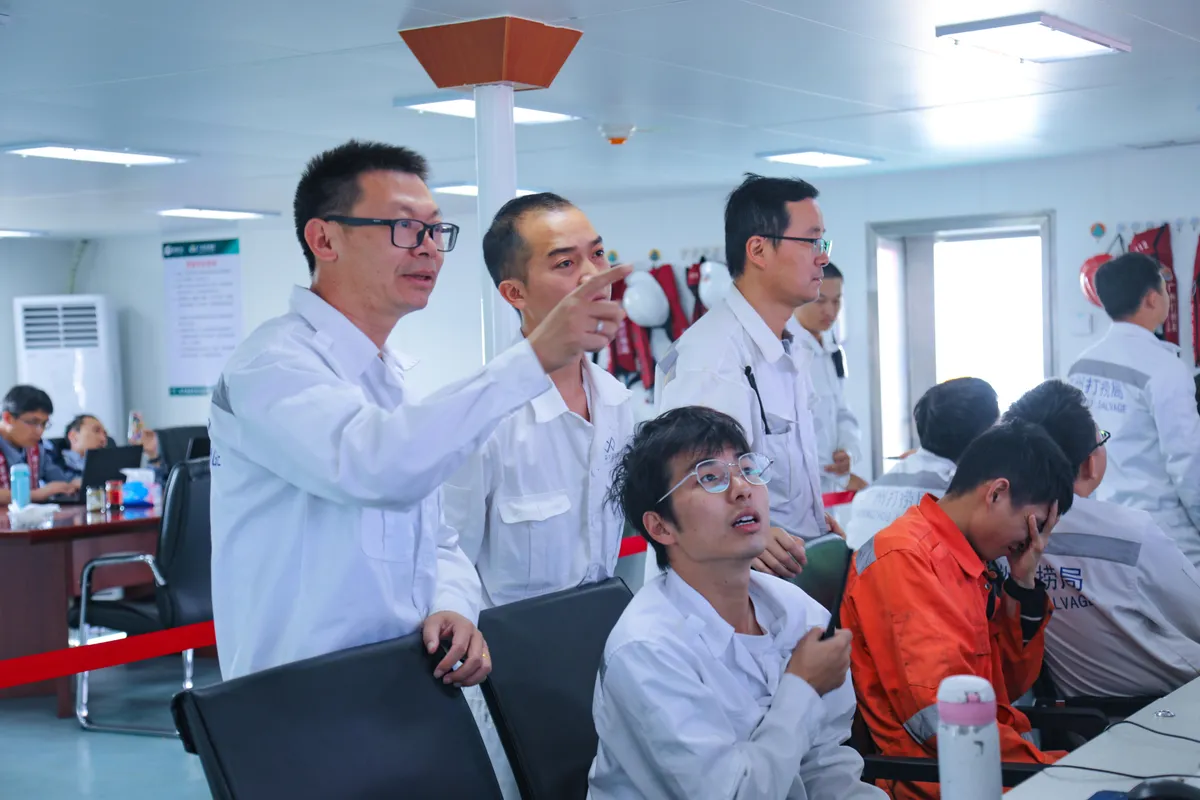
On the first day of fishing season, the Xiamen Port Integrated Dispatch and Command Center underwent practical testing, achieving efficient "sea-port-fishing" coordination. Center staff used a video monitoring system to track the movements of numerous fishing vessels in Anchorage No. 3 within the port and the waters near Zhangzhou Wuyu Island, conducting precise traffic guidance. Remote dispatch coordinated maritime law enforcement personnel and relevant departments to carry out joint sea-air fishing protection operations in areas with concentrated fishing vessels. Professional rescue helicopters and patrol vessels conducted sea-air emergency rescue drills, preparing for emergency response to unexpected incidents.
Building a "One-Screen Overview" Scenario for the Port Area
Given the dense shipping routes and numerous port areas in the jurisdiction, as well as the overlapping of fishing vessel operation areas in Xiamen, Zhangzhou, and Quanzhou with commercial vessel navigation channels, the Xiamen Maritime Safety Administration explored a "cross-regional coordination, cross-mode connection, cross-field integration" approach. This led to the development of a "physical operation, integrated coordination, and intelligent empowerment" Xiamen Port Integrated Dispatch Operation Model, effectively reducing collision risks between commercial and fishing vessels.
In terms of physical operation, the Xiamen Port Integrated Dispatch and Command Center achieves close coordination between maritime traffic organization and port production order through daily joint dispatch, ensuring efficient and convenient vessel entry and exit. Before the fishing season began, maritime, ocean, and fisheries departments in Xiamen and Zhangzhou upgraded and signed the "Xiamen-Zhangzhou Sea Area Commercial and Fishing Vessel Safety Cooperation Agreement," implementing a "sea-port-fishing" joint prevention and governance strategy.
In terms of integrated coordination, adhering to a proactive defense concept, the Xiamen Port Integrated Dispatch and Command Center incorporates fishing season cycles and fishing vessel concentration areas into navigation environment planning. It overlays and compares commercial vessel pre-arrival reports with berth docking and departure plans to effectively implement route separation for commercial and fishing vessels. It establishes a "one ship, one file" system for key commercial vessels to achieve source control and implements on-site consultations during key periods by fisheries departments, strengthening multi-party real-time coordination and precise dispatch.
In terms of intelligent empowerment, the Xiamen Port Integrated Dispatch and Command Center leverages existing systems to consolidate data on commercial vessel berth status, meteorological and hydrological conditions, and fishing vessel dynamics. It explores the creation of a "one-screen overview" scenario for port area operations, enabling one-click dispatch and full-area response, effectively addressing challenges of frequent communication and multi-party coordination.
Zou Sheng, Deputy Director of the Command Center at the Xiamen Maritime Safety Administration, stated that with the digital "one-screen overview" scenario, emergency forces can be mobilized with one click, emergency instructions can be issued instantly, emergency personnel in the jurisdiction can assemble and deploy within 10 minutes, and any emergency force can reach the incident area within 30 minutes for initial response, significantly improving emergency reaction speed.
Based on the characteristics of Xiamen's sea area, the Xiamen Port Integrated Dispatch and Command Center relies on the vessel traffic management system to monitor vessel direction, speed, and anchoring status in real time. When duty personnel detect an urgent situation, they immediately use high-frequency communication to remind vessels to avoid collisions. During the "black high-risk period" from 11:00 PM to 5:00 AM, tracking and intervention are intensified to promptly correct dangerous behaviors such as deviation from course and speeding.
"Ensuring safety during the fishing season is just the beginning. Our main focus moving forward is to comprehensively enhance the operational efficiency of port services," said Huang Yanpin, Director of the Xiamen Maritime Safety Administration. "Building on the practice of multi-party collaboration and centralized governance, the Xiamen Maritime Safety Administration will deeply explore the potential of the integrated dispatch and command mechanism, accelerate the development of a digitalized service platform for port integration with data sharing, and fully expand 'many-to-one' collaborative service scenarios. By systematically coordinating and efficiently allocating various elements of port shipping, we aim to further reduce vessel operation cycles within the port, improve port docking and turnover efficiency, enhance passenger and cargo transportation quality at Xiamen Port, and foster the robust development of the cruise and yacht industries, establishing a solid and powerful 'sea-port-navigation' integrated support system."
-
China Classification Society Shanghai Branch Innovatively Conducts 2026 New Employee Orientation Training4883
-
The nation's first lighthouse data intellectual property registration established at Naozhou Lighthouse.4455
-
Tianjin Maritime Bureau visited Yan'an "Young Maritime School" to conduct the "First Lesson" on maritime safety knowledge for the new school term.3404
-
Yangshan Port Maritime Authorities Take Multiple Measures to Ensure the Safe Departure of Thousands of Fishing Vessels4179
-
The first domestic green methanol bunkering operation for an internationally navigating bulk carrier has been successfully completed.4141