
The "Maritime Blue" Behind the Sea-Viewing Train
Recently, the sea view of Ningbo Rail Transit Line 12 has gone viral online. The train travels across the blue waves of Xiangshan Harbor, with the sea and sky blending seamlessly outside the window, and the traffic of the Yongguan Expressway running parallel. Netizens affectionately call it the "subway with a sea view."
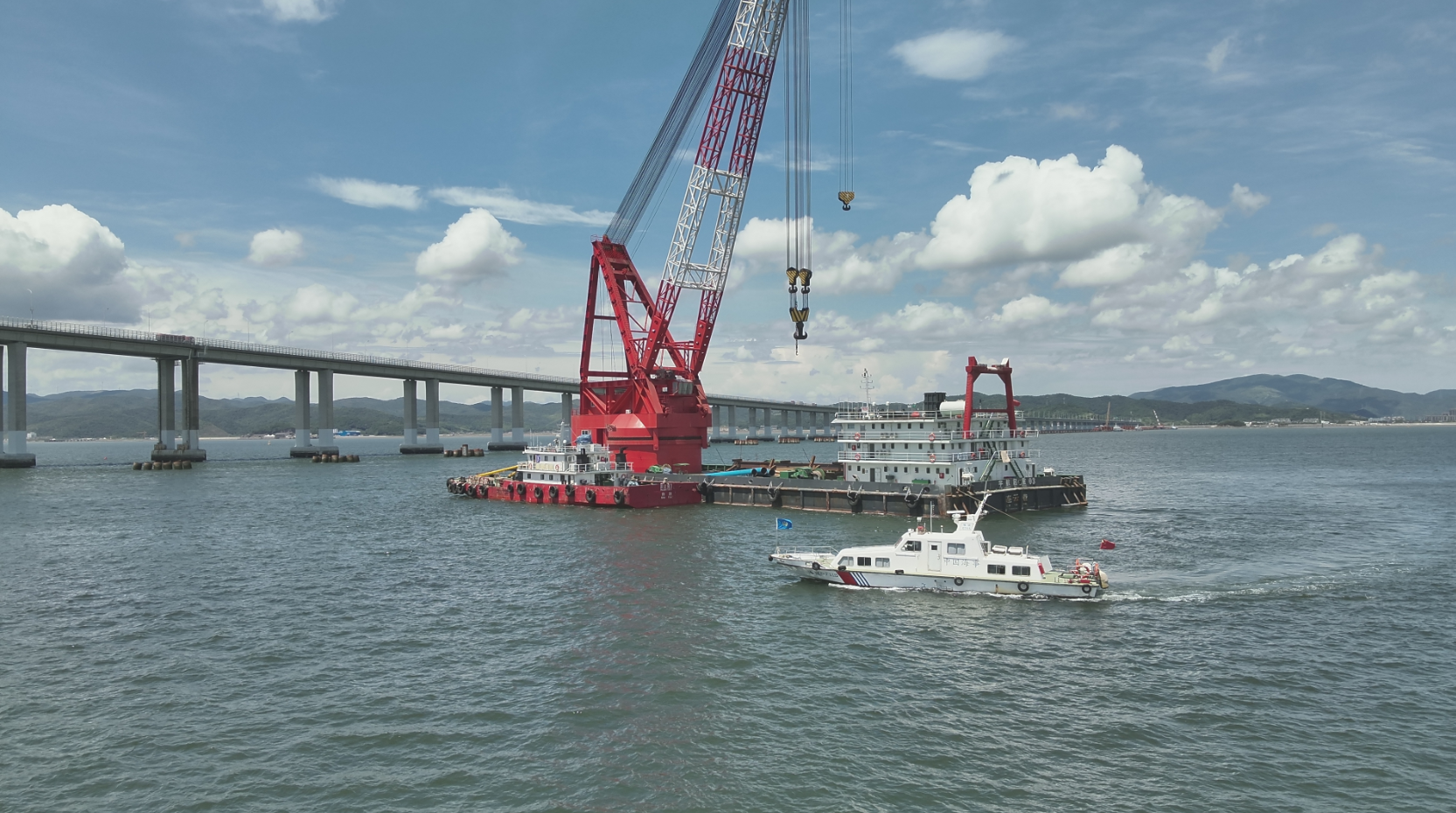
This popular sea-view section is located on the Xiangshan Harbor Cross-Sea Bridge of the city railway. It is the first city (suburban) railway cross-sea bridge in China, with a total length of 8.3 kilometers. Standing side by side with the Xiangshan Harbor Highway Bridge, it creates a unique scenery of "double bridges lying on the waves, trains over the sea."
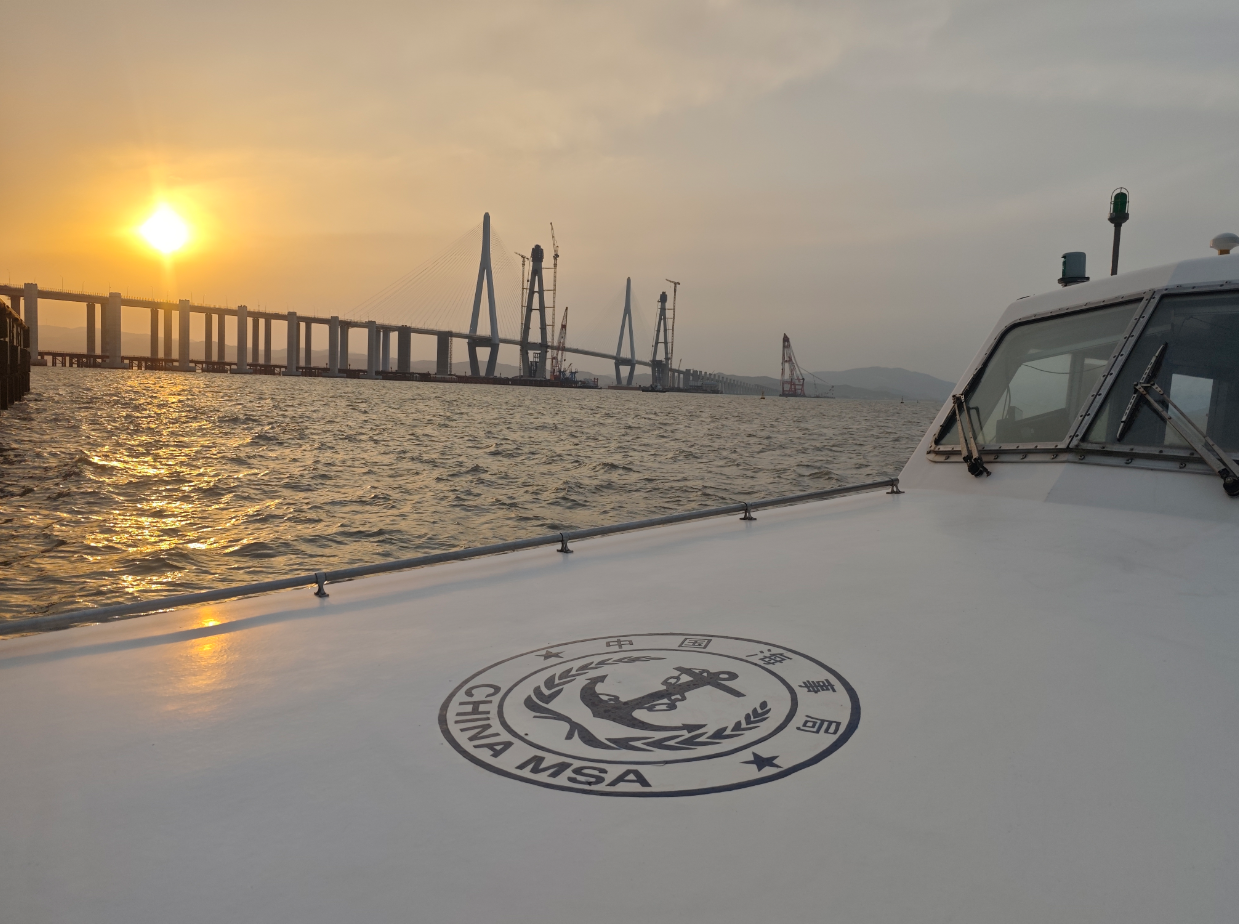
Beyond the stunning scenery lies the challenge of complex and rigorous water-based construction and navigation control. As the world's largest span ballastless track railway cable-stayed bridge, the construction of the bridge, which began in 2023, has steadily progressed amidst waves and tides—from the first pile foundation entering the sea to the completion of the bridge structure. Xiangshan Harbor has significant tidal differences and rapid currents, with commercial ships, fishing boats, and construction vessels interweaving. The new bridge is only 50 meters away from the existing Xiangshan Harbor Highway Bridge, making it imperative to ensure both construction safety and navigation security. Building a bridge over the sea is challenging for every pile and every beam, and even more so for every moment spent racing against the wind and waves or negotiating space with the tides. Xu Jiabo, director of the Xiangshan Harbor Cross-Sea Bridge Information Command Center for the city railway, admitted, "The difficulty of construction and on-site management was not small. Seeing the train running smoothly today makes all the hard work worthwhile." This statement reflects the sentiments of the builders and serves as a testament to maritime safety efforts.
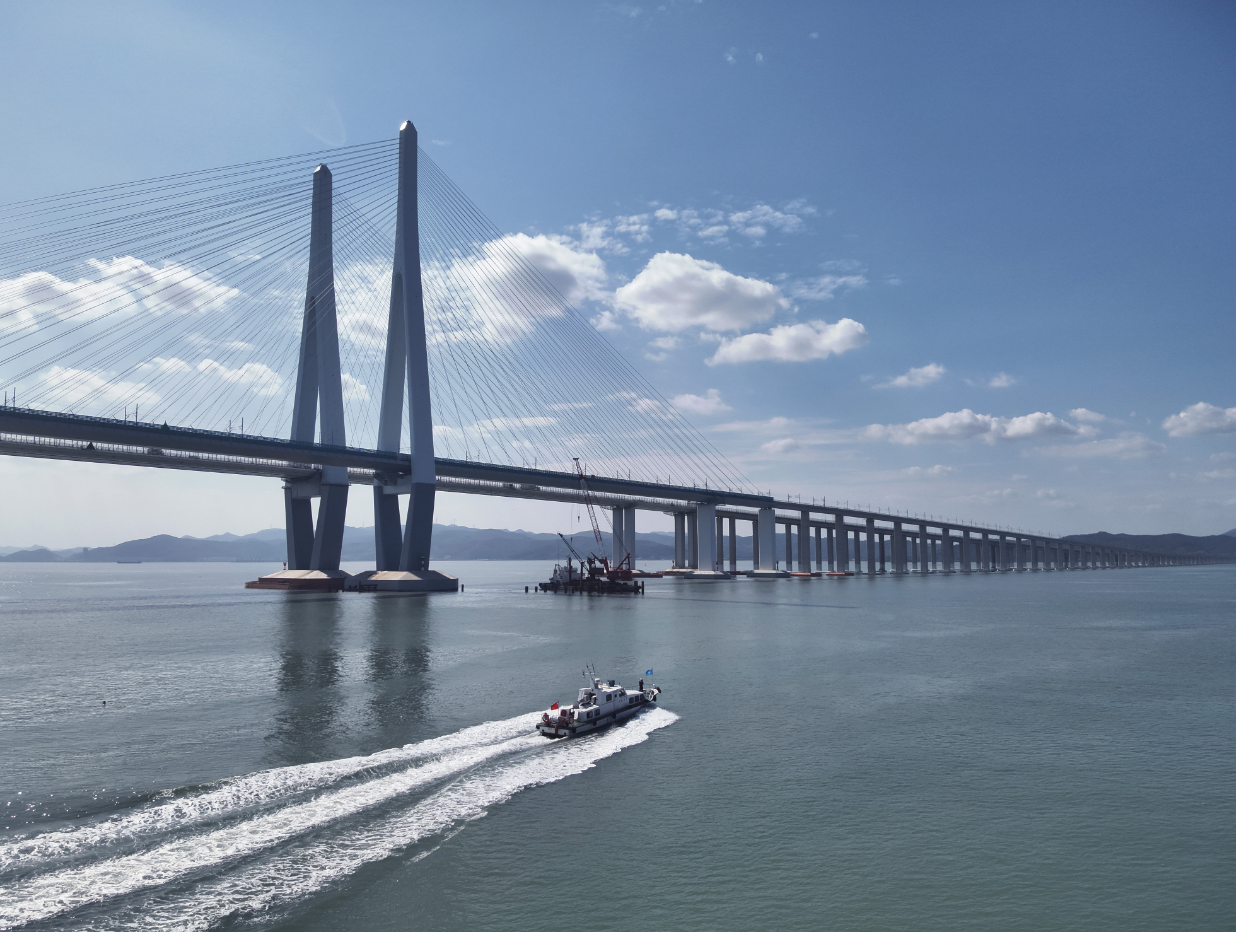
During the three years of construction, the battlefield of maritime personnel was not only the magnificent scenery where mountains meet the sea but also the roaring engines of patrol boats, the constant calls on high-frequency radios, and the flashing electronic nautical charts. At dawn, before the sea fog dissipates, patrol boats are already untied and set off. Maritime law enforcement officers board and inspect incoming construction vessels, checking everything from the bow to the engine room, verifying ship certificates, life-saving equipment, firefighting gear, and anti-pollution devices to ensure every construction vessel is "fit for duty." At noon, under the scorching heat, maritime law enforcement officers continue patrolling the waters around the bridge, inspecting the areas near the piers, construction zones, and busy navigation areas for potential hazards. Late at night, they use AIS, CCTV, and other monitoring tools to closely track vessel movements in the bridge waters, promptly sending safety reminders to passing ships. During critical periods such as major construction milestones and fishing seasons, they organize water traffic flow to ensure dual safety for construction and navigation. While trains speed across the bridge above, steadfast safety measures are maintained below. The dynamic above and the calm below are a true reflection of safe navigation in the Xiangshan Harbor waters.
The opening of the bridge is not the end but a new beginning for maritime water safety assurance. After the bridge is put into use, collision prevention for the bridge becomes a top priority for maritime supervision. Fundamental and critical tasks such as water traffic safety management in the bridge area, navigation order maintenance, and emergency incident handling must continue with consistent effort and long-term commitment.
With the official opening of Ningbo Rail Transit Line 12, more and more attention is being drawn to this long bridge over the blue sea. The speeding train carries the city's forward momentum, while the steadfast efforts below the bridge fulfill the maritime personnel's commitment to their duties. The clear sea passage remains, and the maritime blue endures.