
-
 China's first "the People's Republic of China Ecological Environment Code" was officially promulgated, in which several chapters systematically regulate the transportation and water transportation industry. The Code sets up a special section on the prevention and control of ship pollution in the sub-sections of "Water pollution Prevention" and "Marine pollution Prevention", which sets clear requirements for the discharge of pollutants from ships, the equipment of pollution prevention equipment and port reception facilities, and sets corresponding legal responsibilities, marking that China's inland river and marine environmental protection has entered a new stage of stricter rule of law.
-
 From January to February 2026, China's total social electricity consumption reached 1654.6 billion kWh, an increase of 6.1 percent over the same period last year, indicating a sustained economic recovery. In terms of industries, the fastest growth rate of electricity consumption in the tertiary industry reached 8.3 per cent, with electricity consumption in the charging and switching services and Internet data services surging by 55.1 per cent and 46.2 per cent respectively. The electricity consumption of the secondary industry increased by 6.3, and the electricity consumption of the high-tech and equipment manufacturing industry increased by 10.6 year-on-year, highlighting the strong momentum of industrial upgrading. The domestic electricity consumption of urban and rural residents maintained steady growth.
-
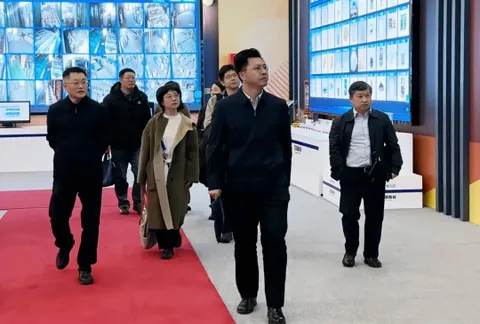 On March 13, the Director of the Department of Foreign Investment and Economic Cooperation of the Ministry of Commerce, Zhao Chunfeng, and his delegation conducted a study on the "Xianfeng Qihang" comprehensive service for going abroad at Zhongguancun Fengtai Park. The research team first visited IBI, where they were warmly received by IBI's director, senior vice president, and board secretary Pan Yong, among other leaders. The delegation visited the IBI digital economy exhibition hall, and both parties exchanged views on cross-border industry-related content, gaining an in-depth understanding of IBI's practices in the field of cross-border industries. Pan Yong, using cases, data, and application scenarios displayed in the exhibition hall, focused on introducing the company's core layout in cross-border industrial zones, digital service models, and cross-border activities.
-
The Ministry of Industry and Information Technology and other three departments issued a notice to deploy and carry out the pilot work of comprehensive application of hydrogen energy. The notice proposes to select urban agglomerations to take the lead in pilot projects by means of "unveiling the list", with the goal of realizing the large-scale application of hydrogen energy in diversified fields by 2030, striving to reach 100000 fuel cell vehicles nationwide, and reducing the cost of terminal hydrogen. The move aims to promote the large-scale and high-quality development of the hydrogen energy industry through scenario traction and policy support, cultivate new kinetic energy for economic growth, and help the green transformation of traditional industries.
-
During the Spring Festival transportation in 2026, the cargo volume of the Yangtze River trunk line exceeded 0.4 billion tons, an increase of 6.33 percent over the same period last year, sending 7.33 million passengers. The article focuses on the growth of key material transportation such as thermal coal and containers, as well as the strong recovery of water tourism passenger transport. At the same time, it expounds the measures taken by the waterway department to ensure the safety and efficiency of navigation through digital means, and summarizes the successful experience of achieving the goal of "zero accident" in water traffic during the Spring Festival.
-
The article reported the contents of the Sichuan Provincial Maritime Affairs Conference, focusing on 2026 as the first year of the 15th Five-Year Plan. Sichuan will strive to complete the investment of 6.5 billion yuan in waterway transportation, focusing on the improvement of high-grade waterways, port optimization and transportation service quality, so as to speed up the construction of a shipping center in the upper reaches of the Yangtze River. At the same time, it reviews the remarkable achievements made by Sichuan Water Transport in investment, waterway construction, cargo turnover and intelligent green water transport during the 14th five-year Plan period, and defines the key work arrangements in 2026 around policy guarantee, infrastructure construction, transportation services, safety management, green and intelligent development and people's livelihood.
-
On March 13, the Ministry of Transport held a party group meeting and a ministerial meeting to convey and study General Secretary Xi Jinping's important speech during the National Two Sessions and the spirit of the National Two Sessions, and to study, deploy and implement the work. The meeting pointed out that it is necessary to thoroughly study and implement the spirit of General Secretary Xi Jinping's important speech, anchor the strategic goal of accelerating the construction of a transportation power, focus on improving the modern comprehensive transportation system, and promote the high-quality development of transportation. The meeting stressed the need to do a solid job in all kinds of work this year, including cultivating new quality productivity in the field of transportation, serving domestic and international double circulation, doing a good job in transportation for the people, grasping safety and stability, and formulating and implementing the transportation plan of the 15th five year plan with high quality, and carrying out the study and education of establishing and practicing the correct concept of political achievements.
-
Hainan Province issued the "Hainan Province Comprehensive Three-dimensional Transportation Network Planning Outline", proposing to basically build a modern high-quality comprehensive three-dimensional transportation network by 2035. With high-quality development as the theme, the plan focuses on building an international shipping hub, an international aviation hub and a sea and land gateway hub, highlighting the characteristics of Hainan's free trade port, and promoting "a game of chess in the province and the integration of the whole island". The focus includes building a western port cluster with Yangpu Port as the core, strengthening connectivity with the "Belt and Road" and RCEP countries, developing port industries and shipping services, improving the intelligent and green level of transportation infrastructure, and serving the country's new development pattern.
-
Jinjiang Shipping's wholly-owned subsidiary has signed four container ship construction contracts with a total amount of 0.82 billion yuan, and plans to deliver four 1800TEU ships in succession starting from June 2028. The move aims to increase the size of the fleet, optimize the capacity structure of Southeast Asian routes, support the expansion of "Silk Road Express" boutique routes, and promote the linkage of Northeast Asia and Southeast Asia regional routes to seize the growth opportunities of the Asian regional market.
-
The 32 member countries of the International Energy Agency have agreed to release 0.4 billion barrels of strategic oil reserves in response to the global oil supply shortage caused by the US and Israel's military attack on Iran. The release plan will be implemented step by step according to the situation of each country, and the specific plan will be announced later. IEA Director General Birol stressed that member countries hold more than 1.2 billion barrels of public emergency reserves and about 0.6 billion barrels of corporate reserves, and must maintain a reserve level of at least 90 days of net imports to cope with potential supply disruptions.
-
During the Fourth Session of the 14th National People's Congress, the Shanghai delegation submitted 3 proposals and 142 proposals. Among them, two proposals of the delegation focused on regional coordinated development and free trade zone legislation, and five proposals of the delegation involved offshore finance, open economy, construction of science and technology innovation center, construction of legal service system and digitalization of aviation trade. The remaining 137 pieces were jointly proposed by representatives, covering economy, science and technology, rule of law, society and other aspects, demonstrating Shanghai's positive role in the implementation of the national strategy.
-
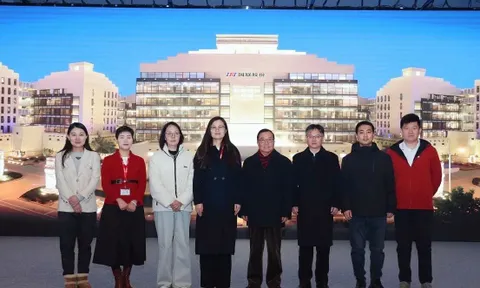 On March 6, Jia Guangdong, President of the China Agricultural International Cooperation Promotion Association and former Party Secretary of the Graduate School of the Chinese Academy of Agricultural Sciences, along with Vice President and Secretary-General Li Li, Executive Deputy Secretary-General of the Technical Transformation and Industrial Development Branch Le Rong, and Minister of Government and Enterprise Affairs of the Technical Transformation and Industrial Development Branch Liu Zeyang, were invited to visit IBIFDD. They were warmly received by IBI Vice President and FDD CEO Yin Haifeng, FDD Vice President Han Xiao, Director of Strategic Development Xu Ce, and Director of Operations Feng Bo. Both parties engaged in fruitful discussions on core topics such as the construction of the FDD seed cross-border trading platform and deep cooperation in industrial digitalization.
-
In the first two months of 2026, the total value of China's import and export of goods trade reached 7.73 trillion billion yuan, an increase of 18.3 percent over the same period last year, making a strong start. Exports grew by 19.2 per cent and imports by 17.1 per cent. From the perspective of trading partners, trade with ASEAN, the European Union and the "Belt and Road" countries has increased significantly, while trade with the United States has declined. Private enterprises have performed outstandingly and have become the main force in foreign trade growth. Both exports and imports of mechanical and electrical products maintained rapid growth, indicating that China's foreign trade structure continued to optimize.
-
The U.S. government announced a $20 billion million maritime reinsurance program aimed at providing war risk insurance and other risks to ships such as oil tankers passing through tense waters such as the Strait of Hormuz. The move is in response to soaring insurance rates and the withdrawal of commercial insurance caused by the escalation of conflicts in the Middle East, so as to ensure the smooth transportation of key energy materials such as oil and natural gas around the world. However, the analysis pointed out that the insurance coverage may be insufficient and that the core concern of shipowners is still personal and ship safety.
-
Hong Kong Changjiang Hutchison Industrial's Panama Port Company has initiated international arbitration proceedings for the illegal takeover of its operated Balboa and Cristobal ports by the Panamanian government, claiming at least US $2 billion. The company accused the Pakistani government of forcibly seizing documents and violating the franchise agreement, and stressed that it would fully pursue its rights and interests. Both the Chinese Ministry of Foreign Affairs and the Hong Kong Special Administrative Region Government expressed opposition to this. Behind the incident, it was accused of a strategic game involving US pressure and China's global port layout.