
Diammonium Phosphate
7576
June 9, 2025, 11:51 AM
Guide
Highlights at a glance
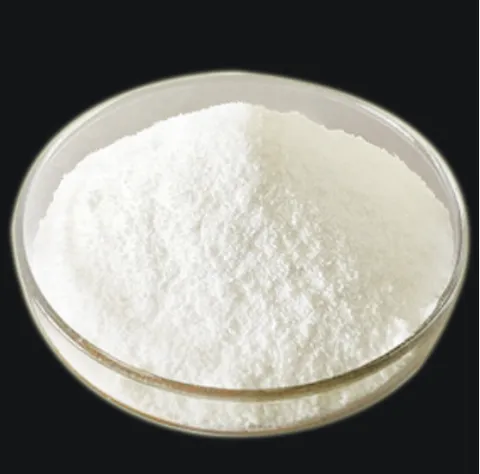
Diammonium phosphate (DAP), with the chemical formula (NH₄)₂HPO₄, is a widely used nitrogen-phosphorus fertilizer containing approximately 18% N and 46–48% P₂O₅, commonly marketed as 18-46-0. It appears as a white crystalline solid, though fertilizer-grade DAP is typically granular and ranges from off-white to grayish or brownish due to impurities. DAP is less hygroscopic than many fertilizers, with a critical relative humidity of ~82.5% at 30°C, making it suitable for storage and handling. It decomposes around 155°C, releasing ammonia, and forms an alkaline solution (pH 7.6–8.2) in water, which can increase ammonia volatilization when surface-applied on high-pH soils. Produced by reacting phosphoric acid with ammonia at a molar ratio near 2:1, DAP is manufactured in granular form through neutralization, granulation, drying, and coating processes. It plays a dominant role in agriculture as a direct fertilizer and in NPK blends due to its high nutrient content and favorable physical properties. Minor industrial uses include flame retardants, yeast nutrients in winemaking, and metal finishing agents. Global production is led by China, the U.S., Morocco, and Russia, while major importers include India, Brazil, and Southeast Asian nations. Prices are influenced by raw material costs (phosphate rock, sulfur, natural gas), energy, freight, and trade policies. Environmental concerns center on ammonia emissions, phosphorus runoff, and heavy metal impurities, driving trends toward enhanced-efficiency formulations, such as coated or inhibitor-treated DAP, to improve nutrient use efficiency and reduce environmental impact.
1.Physical and Chemical Properties
1.1 Fundamental Properties
-
Chemical Formula: (NH₄)₂HPO₄
-
Molecular Weight: 132.06 g/mol
-
Composition:
-
Nitrogen (N) content: Typically 18% N (as NH₄⁺). Theoretical max is 21.21% N.
-
Phosphorus (P) content (as P₂O₅): Typically 46-48% P₂O₅. Theoretical max is 53.76% P₂O₅.
-
Common fertilizer grade: 18-46-0 (18% N, 46% P₂O₅, 0% K₂O).
-
-
Appearance:
-
White crystalline solid when pure. Fertilizer grade is typically granular, ranging in color from white/off-white to grayish or brownish, depending on impurities from the phosphoric acid used.
-
-
Odor:
-
May have a slight ammoniacal odor, especially if it has started to decompose or if impurities are present.
-
-
Crystal Structure: Monoclinic.
-
Melting Point:
-
Decomposes upon heating before melting. Starts to decompose around 155°C (311°F), releasing ammonia (NH₃) and water, forming monoammonium phosphate (MAP) and then ammonium polyphosphates and phosphoric acid at higher temperatures.
(NH₄)₂HPO₄(s) → NH₃(g) + NH₄H₂PO₄(s)
-
-
Density:
-
Approximately 1.62 g/cm³ (solid). Bulk density of granular fertilizer is lower (e.g., 0.88 - 1.0 g/cm³).
-
-
Hygroscopicity:
-
Less hygroscopic than MAP, urea, or ammonium nitrate under many conditions. Critical Relative Humidity (CRH) at 30°C is around 82.5%. This makes it relatively good for storage and handling.
-
1.2 Solution Properties
-
Solubility in Water: Highly soluble in water.
-
~57.5 g/100 mL at 10°C
-
~69 g/100 mL at 20°C
-
~106.7 g/100 mL at 100°C
-
-
pH of Solution:
-
Aqueous solutions are alkaline. A 1% solution has a pH of about 7.6-8.2. This initial alkaline reaction in soil can temporarily increase ammonia volatilization if DAP is surface-applied to alkaline or calcareous soils without incorporation.
-
-
Enthalpy of Solution:
-
Dissolution in water is endothermic.
-
1.3 Chemical Reactivity
-
Stability:
-
Relatively stable under normal dry storage conditions.
-
-
Decomposition:
-
Decomposes upon heating, releasing ammonia. This ammonia loss can occur even at moderately elevated storage temperatures over time, especially if moisture is present.
-
-
Reactions:
-
With acids: Reacts with acids to form MAP or phosphoric acid and the corresponding ammonium salt.
(NH₄)₂HPO₄(s) + HCl(aq) → NH₄H₂PO₄(s) + NH₄Cl(aq) -
Incompatible with strong bases (e.g., lime), which will cause significant ammonia loss.
-
Can be corrosive to some metals (e.g., brass, bronze, copper, zinc, galvanized steel) in the presence of moisture due to ammonia release. Aluminum and stainless steel are generally more resistant.
-
1.4 Grades
-
Fertilizer Grade:
-
Most common, granular, typically 18-46-0. Used for direct application or in blends.
-
-
Technical Grade:
-
Higher purity, used in some industrial applications, though less common than technical MAP.
-
-
Food Grade:
-
Not commonly used as a direct food additive compared to other phosphates, but if produced, would need to meet very high purity standards. (Monocalcium phosphate, sodium phosphates, and potassium phosphates are more typical food additives).
-
2.Production Technologies
DAP is produced by reacting phosphoric acid with ammonia, controlling the molar ratio to achieve the desired diammonium salt.
2.1 Raw Materials
-
Phosphoric Acid (H₃PO₄):
-
Wet-Process Phosphoric Acid (WPPA): The primary source for fertilizer-grade DAP. Quality (P₂O₅ concentration, impurities like Fe, Al, Mg, F, SO₄) is critical.
-
Merchant-Grade Phosphoric Acid (MGA): Typically 50-54% P₂O₅.
-
Purified phosphoric acid is rarely used for bulk DAP production due to cost.
-
-
Ammonia (NH₃):
-
Anhydrous ammonia from the Haber-Bosch process.
-
2.2 Manufacturing Process
The core reaction is the neutralization of phosphoric acid with ammonia:
2NH₃(g) + H₃PO₄(aq/l) → (NH₄)₂HPO₄(s/aq)The process is similar to MAP production but with a higher degree of ammoniation.
-
Reaction (Neutralization):
-
Anhydrous ammonia (liquid or gas) and phosphoric acid are reacted. This is often done in two stages:
-
Pre-neutralizer: Phosphoric acid is partially ammoniated to a mole ratio of NH₃:H₃PO₄ of around 1.3-1.5:1 (forming a slurry of MAP and DAP). This helps control the highly exothermic reaction and minimizes ammonia losses. The pH is typically around 5.8-6.5.
-
Reactor/Pipe-Cross Reactor (PCR): Additional ammonia is introduced to the slurry from the pre-neutralizer to achieve a mole ratio closer to 2:1 (typically 1.95-2.05:1 for DAP). The reaction is completed here, and the heat of reaction evaporates significant amounts of water, producing a molten salt or a concentrated slurry. For DAP, the pH of the slurry is typically around 7.0-7.5.
-
-
The temperature in the reactor needs careful control to maximize DAP formation and minimize ammonia loss or formation of polyphosphates.
-
-
Granulation:
-
The DAP slurry or melt from the reactor is fed into a granulator (e.g., pugmill or rotary drum granulator).
-
Recycled fines (undersized and crushed oversized DAP particles) are added to provide nuclei and control moisture/temperature.
-
The granulation process forms granules. Sometimes, a small amount of sulfuric acid is added to the granulator to react with excess ammonia, forming ammonium sulfate, which can improve granulation and hardness.
-
-
Drying:
-
Wet granules are dried in a rotary dryer with hot air to reduce moisture content (e.g., 1-2.5%).
-
Over-drying or excessive temperatures can cause ammonia loss and degradation of DAP.
-
-
Screening:
-
Dried granules are screened to separate product-sized granules from oversized (crushed and recycled) and undersized (recycled) particles.
-
-
Cooling:
-
Product-sized granules are cooled in a rotary cooler.
-
-
Coating (Optional):
-
An anti-caking agent may be applied.
-
-
Scrubbing/Emission Control:
-
Exhaust gases containing ammonia, dust, and fluoride compounds are scrubbed, typically with acidic solutions (e.g., phosphoric acid or sulfuric acid solution in scrubbers) to recover nutrients and meet environmental regulations.
-
Key Differences in Production from MAP:
-
Higher NH₃:H₃PO₄ mole ratio: Around 2:1 for DAP vs. 1:1 for MAP.
-
Higher pH during reaction: The slurry/melt is more alkaline.
-
Careful control of ammoniation: To avoid over-ammoniation (which leads to ammonia slip) or under-ammoniation (leading to MAP formation).
3.Applications
3.1 Fertilizers (Predominant Use)
-
Direct Application Fertilizer:
-
One of the most popular and widely used phosphorus fertilizers globally due to its high nutrient analysis (N and P) and good handling properties.
-
The N is in ammoniacal form, and P is highly water-soluble, making it readily available for plant uptake.
-
Suitable for a wide range of crops and soil types.
-
When applied to soil, the DAP granule dissolves, creating an alkaline zone (pH ~8) around it due to the
HPO₄²⁻ + H₂O ⇌ H₂PO₄⁻ + OH⁻equilibrium. This alkaline pH can lead to some ammonia (NH₃) volatilization if DAP is surface-applied, especially on calcareous or high-pH soils, without incorporation. The released ammonia can also be phytotoxic to germinating seeds if placed too close. -
Over time, nitrification of the ammonium (NH₄⁺ → NO₃⁻) leads to a net acidic effect in the soil.
-
-
Bulk Blending Component:
-
Excellent for NPK bulk blends due to its high nutrient content, good physical properties (granule strength, size compatibility with other fertilizers like urea and potassium chloride).
-
-
Compound Fertilizer Production:
-
Used as a raw material in the production of complex/compound NPK fertilizers.
-
-
Liquid Fertilizers / Fertigation:
-
While granular DAP is the main form, purified DAP can be used in liquid fertilizer formulations or for fertigation. However, MAP (12-61-0) is often preferred for solubility and lower pH in stock solutions for fertigation. DAP solutions have a higher pH which can cause precipitation issues with some micronutrients or in hard water.
-
3.2 Industrial Applications (Minor Uses)
-
Flame Retardant:
-
Like MAP, DAP can act as a flame retardant for materials like wood, paper, and textiles. It releases ammonia and forms a glassy coating of phosphoric/polyphosphoric acids upon heating.
-
Often used in forestry applications as a fire retardant (e.g., dropped from aircraft to control wildfires), often colored red with iron oxide for visibility.
-
-
Yeast Nutrient:
-
In brewing, winemaking, and yeast production, food-grade DAP can be added as a source of nitrogen (ammonia) and phosphate to stimulate yeast growth and fermentation. It's a very common yeast nutrient in winemaking.
-
-
Metal Finishing:
-
Used in some metal finishing processes as a corrosion inhibitor or for surface treatment.
-
-
Fluxing Agent:
-
Can be used as a flux for soldering certain metals.
-
-
Catalyst:
-
In some chemical reactions.
-
3.3 Other Niche Applications
-
pH Control:
-
In some specific chemical processes, DAP can be used to buffer or adjust pH.
-
-
Animal Feed:
-
Can be used as a source of P and non-protein N for ruminant feeds, but subject to regulations and requires careful formulation to avoid ammonia toxicity. Other feed phosphates are generally preferred.
-
4.Market Analysis
4.1 Global Production and Consumption
-
Major Fertilizer Commodity: DAP is a leading phosphate fertilizer globally, with massive production and trade volumes.
-
Major Producing Countries: Similar to MAP, countries with large phosphate rock reserves and phosphoric acid capacity are dominant. This includes:
-
China (largest producer and often a major exporter)
-
USA
-
Morocco
-
Saudi Arabia
-
Russia
-
India (significant producer, but also a major importer)
-
-
Major Consuming/Importing Countries: Large agricultural economies are major consumers. Key importers include:
-
India
-
Pakistan
-
Brazil
-
Countries in Southeast Asia and Latin America.
-
-
Consumption Drivers:
-
Similar to MAP: global food demand, crop prices, soil nutrient replenishment, dietary shifts.
-
Its high analysis (total N+P₂O₅) often makes it economically attractive on a per-unit-of-nutrient basis.
-
Good handling and storage characteristics.
-
4.2 Price Dynamics and Economics
-
Price Influencers:
-
Phosphoric Acid Prices: Driven by phosphate rock and sulfur costs.
-
Ammonia Prices: Linked to natural gas costs.
-
Global Supply/Demand for DAP: International trade balances significantly influence prices.
-
Prices of Competing Fertilizers: Such as MAP, TSP, urea.
-
Agricultural Economics: Farm income, crop prices.
-
Energy Costs: For production and logistics.
-
Government Policies: Export taxes (e.g., sometimes in China), import tariffs, subsidies.
-
Freight Costs: A key component of landed cost for this bulk commodity.
-
-
Benchmarking:
-
DAP prices (e.g., FOB US Gulf, FOB China) are key benchmarks in the global fertilizer market.
-
4.3 Future Trends and Developments
-
Enhanced Efficiency Fertilizers (EEFs):
-
Development of DAP with coatings (polymer, sulfur) or urease/nitrification inhibitors to improve nitrogen efficiency (reduce ammonia volatilization and nitrate leaching) and control phosphorus release.
-
Incorporation of micronutrients or biostimulants into DAP granules.
-
-
Focus on Environmental Impact:
-
Efforts to reduce ammonia volatilization from DAP application through soil incorporation, use of inhibitors, or modified formulations.
-
Managing phosphorus runoff to prevent eutrophication.
-
-
Regional Production Shifts:
-
Investment in DAP production in regions with strategic access to raw materials (phosphate rock, natural gas for ammonia).
-
-
Competition with MAP:
-
The choice between DAP and MAP can depend on specific crop needs, soil conditions, pricing, and local farmer preferences. MAP's lower pH can be advantageous in alkaline soils, while DAP offers higher nitrogen.
-
5.Upstream and Downstream Linkages
5.1 Key Raw Material Inputs
-
Phosphate Rock: The fundamental P source.
-
Sulfur: For sulfuric acid to produce WPPA.
-
Ammonia (NH₃): Provides the nitrogen component.
-
Energy.
5.2 Relationship to Other Chemical Industries
-
Phosphoric Acid Industry:
-
DAP production is a primary consumer of phosphoric acid.
-
-
Ammonia/Nitrogen Fertilizer Industry:
-
Sources ammonia; DAP competes and complements other N and P fertilizers.
-
-
Sulfuric Acid Industry:
-
Critical for WPPA production.
-
5.3 Downstream Product Considertaions
-
Fertilizer Blends (NPK):
-
DAP is a cornerstone of many NPK bulk blends.
-
-
Compound NPK Fertilizers:
-
Can be a starting material or intermediate.
-
-
Specialty Fertilizers:
-
Coated DAP, DAP with additives.
-
5.4 Environmental and Handling Considerations
-
Ammonia Volatilization:
-
A key concern, especially if DAP is surface-applied to alkaline soils without incorporation. This reduces nitrogen efficiency and can have air quality implications.
-
Best management practices (BMPs) include sub-surface application or incorporation into the soil.
-
-
Dust:
-
Granular DAP can produce dust during handling. Good housekeeping and dust control measures are needed.
-
-
Water Eutrophication:
-
As with any P fertilizer, runoff containing phosphate can lead to eutrophication. Nutrient management planning is essential.
-
-
Heavy Metals:
-
Impurities like cadmium from phosphate rock can be present in DAP. Regulations in many countries limit these.
-
-
Storage:
-
While less hygroscopic than some fertilizers, DAP should be stored in cool, dry conditions to prevent caking and ammonia loss. Bulk piles should be covered.
-
-
Corrosivity:
-
Can be corrosive to certain metals if moisture is present.
-
-
Phytotoxicity:
-
High concentrations of ammonia released from DAP near germinating seeds or roots can be damaging. Proper placement is important.
-
More Sourcing News
77669
July 4, 2025
73940
July 10, 2025
71856
July 10, 2025
64675
July 4, 2025
61908
July 10, 2025