Blocker Mulch Film
6738
April 8, 2025, 10:00 AM
Guide
Highlights at a glance
This article provides a comprehensive technical overview of agricultural mulch films, covering material composition, physical and chemical properties, functional performance, classification by optical characteristics, application methods, and industry supply chain dynamics. It details the use of polyethylene (LDPE/LLDPE), EVA copolymers, recycled and bio-based materials, along with additive systems for UV stabilization, coloration, and functionality. Key properties such as thickness, optical behavior, mechanical strength, thermal regulation, and durability are quantified. The film’s roles in moisture retention, temperature modulation, weed suppression, pest control, and yield enhancement are examined across black, transparent, colored, and dual-layer variants. Surface treatments, chemical interactions with soil, and environmental impacts are also discussed. The report further outlines installation techniques, equipment requirements, and integration with irrigation and nutrient systems, concluding with insights into global raw material supply, distribution channels, and recycling initiatives driving the circular economy in agricultural plastics.

1.Basic Performance Characteristics
1.1 Material Composition and Structure
-
Base Polymer Components
-
Polyethylene(PE): 70-95% of mulch films use LDPE or LLDPE as base material
-
EVA copolymers: 5-18% content, improves, flexibility and weatherability
-
Recycled materials: 15-40% PCR (post-consumer recycled) content in certain non-food applicatons
-
Bio-based PE: 2-5% in newer mulch films, derived from sugarcane ethanol
-
-
Additive System
-
Carbon black(black mulch): 2.0-3.5%, provides light blocking and UV protection
-
Colorants(colored mulch): 1.0-3.0% organic or inorganic pigments
-
UV stabilizers: 0.5-1.5% HALS and/or benzotriazole compounds
-
Antioxidants: 0.1-0.3% hindered phenols and phosphites
-
Anti-drip agents: 0.3-0.8% in silver reflective films
-
IR enhancers: 0.5-1.5% in heat-retaining mulch films
-
-
Multilayer Structures
-
Single-layer mulch: 60-65% market share, thickness 15-50μm
-
Co-extruded multilayer: 35-40% market share, typically 3-layer structure
-
Layer composition: outer layer(stabilizers + anti-aging)/ middle layer (base + recycled) / inner layer (special functions)
-
Layer thickness ratio: Three-layer films typically 20/60/20 or 15/70/15
-
Special structures: Dual-color mulch (black top/ white bottom) providing light blocking on top and reflection below
-
1.2 Physical Properties
-
Thickness Range
-
Standard Thickness:15-20μm (0.6-2.0mil)
-
Light mulch film: 15-20μm, single-season use
-
Medium mulch film: 25-35μm, standard applications
-
Heavy mulch film: 40-50μm, multi-season or harsh conditions
-
Ultra-thin biodegradable film: 8-15μm
-
Thickness tolerance: ±7% within same roll, ±10% between batches
-
-
Optical Properties
Film Type Visible Light Transmission Visible Light Reflection Infrared Blocking Light Diffusion Black 4-8% 85-95% - Transparent 85-92% 8-12% 10-20% 15-25% White 20-30% 60-75% 30-40% 80-90% Silver 10-15% 65-80% 60-80% 70-85% Colored (red/blue/yellow) 30-60% 20-40% 20-40% 40-60% -
Mechanical Properties
Property LDPE Mulch LLDPE Mulch Biodegradable Mulch Tensile Strength (MD/TD, MPa) 18-25/16-22 28-40/25-35 12-20/10-18 Elongation at Break (MD/TD, %) 250-450/300-550 500-700/600-800 200-400/250-450 Tear Resistance (MD/TD, N/mm) 20-40/40-80 50-100/100-200 15-30/25-50 Puncture Resistance (N) 5-12 12-25 3-9 Initial Stretch (%) 10-15 8-12 12-18
Note: MD=Machine Direction TD=Transverse Direction
-
Thermal Properties
-
Black Mulch:
-
Daytime soil warming: 3-7°C higher than bare soil
-
Night-time heat retention: 1-3°C higher than bare soil
-
Solar absorption: 90-95%
-
-
Transparent Mulch:
-
Daytime soil warming: 5-9°C higher than bare soil(greenhouse effect)
-
Night-time heat retention: 1-2°C higher than bare soil
-
Early maturation effect: 7-14 days advancement
-
-
Colored mulch temperature effects:
-
Red: +4-6°C
-
Blue: +2-4°C
-
Silver: +1-3°C
-
-
-
Aging and Durability
-
Stand service life: Black LDPE 4-6 months, LLDPE 6-9 months
-
UV degradation rate: unstabilized LDPE loses 10-15% tensile strength per month of exposure
-
Light transmission retention (transparent films): 85-90% after 3 months, 75-85% after 6 months
-
Environmental condition impact: lifespan reduced by 30-40% in 50°C high-temperature soil
-
Biodegradable film complete degradation:12-24 months in soil (depending on environmental conditions)
-
1.3 Functional Properties
-
Moisture Regulation Capability
-
Soil evaporation reduction: 70-95% (compared to bare soil)
-
Water retention gains: 180-350m³/ha water savings per season
-
Water vapor transmission rate(WVTR):15-25g/m²·day (standard PE film)
-
Condensation recovery:20-40 g/m²·day collected on the inner surface of transparent films
-
-
Temperature Regulation Function
Film Type Daily Average Temperature Increase Morning Temperature Rise Night Retention Daily Temperature Range Black +2-5°C +1-3°C +1-3°C -4-8°C Transparent +4-8°C +2-5°C +0.5-2°C -1-3°C Silver/White +1-3°C +0.5-2°C +0.5-1°C -3-6°C Colored (Average) +2-4°C +1-3°C +0.5-2°C -2-5°C Measurement Depth:10cm soil layer
Biological Control Functions
-
Weed suppression effectiveness: Black film > 95%, colored films 80-90%, transparent film
-
Soil-borne pathogen reduction: black film 30-50%, transparent film(solarization) 60-95%
-
Specific pest repellence:
-
Silver reflective film: reduces aphids by 60-80%, whiteflies by 50-70%
-
Blue film: reduces thrips by 40-60%
-
Yellow film: attracts certain insects(useful for monitoring)
-
-
Nematode control: Transparent film solarization efficiency 70-90%
-
Spectral Selectivity Functions
-
Red film: Increases red:far-red ratio (R:FR) to 1.2-1.5 (natural light 1.1)
-
Black film: Blocks 95-98% of photosynthetically active radiation (PAR) from reaching soil
-
Silver film: Reflects 55-75% of incident light, increasing PAR to lower canopy
-
Special spectral films: Selectively filter UV-B, enhance specific pigment synthesis
-
Yield impact: Red mulch increases yield 5-15% (strawberries, tomatoes), silver mulch 3-12% (most vegetables)
-
2.Chemical Properties and Formulations
2.1 Chemical Composition and Molecular Structure
-
Polyethylene(PE) Based Films
-
LDPE chemical Formula: -(CH₂-CH₂)n- with branched structure
-
LLDPE Chemical Formula:-(CH₂-CH₂)n- with controlled short-chain branching
-
Molecular Weight: Mw 100,000-300,000 g/mol
-
Density Range
-
LDPE: 0.915-0.925g/cm³
-
LLDPE: 0.918-0.928g/cm³
-
HDPE: 0.940-0.965 g/cm³
-
-
Crystallinity: LDEP 40-50%, LLDPE 30-45%, HDPE 60-80%
-
Branch Frequency: LDPE 15-30 branches/1000C, LLDPE 10-25 branches/1000c
-
-
EVA Copolymer Component:
-
Chemical Formula: -(CH₂-CH₂)x-[CH₂-CH(OCOCH₃)]y-
-
Vinyl Acetate Content: 5-18% in agricultural films
-
Functional Properties: increases flexibility, improves low-temperature performance
-
Crystallinity Range: 20-35% (decreases with increasing VA content)
-
Melting Point Range: 85-105°C (vs. 105-115°C for pure LDPE)
-
Polarity: Moderately polar due to acetate groups
-
-
Biodegradable polymer systems:
-
PBAT chemical formula: polybutylene adipate terephthalate, complex polyester structure
-
PLA Chemical Formula: [CH₃CH(CO₂H)]n
-
Starch-based blends: modified starch(C₆H₁₀O₅)n combined with polyesters
-
Molecular Weight Range: 50,000-200,000 g/mol
-
Crystallinity: PLA 10-40%, PBAT 20-35%, PBS 35-45%
-
Glass Transition Temperature: PLA 55-60°C, PBAT -30°C, PBS -35°C
-
2.2 Additive Chemical Systems
2.2a UV stabilizer Chemistry
-
HALS(Hindered Amine Light Stabilizers)
-
Chemical Structure: Based on 2,2,6,6-tetramethylpiperidine
-
Mode of Action: Nitroxyl radical formation trapping free radicals
-
Effective Range: 315-400nm (UV-A)
-
Migration Rate: 0.2-0.8% loss/month from surface
-
-
Benzotriazole UV Absorbers
-
Chemical Structure: 2-(2-hydroxyphenyl)-benzotriazole derivatives
-
Mode of Action: UV absorption and energy dissipation
-
Effective Range: 290-350nm (UV-B and partial UV-A)
-
Synergistic Effect: 1.5-2.5× effectiveness when combined with HALS
-
2.2b Antioxidant Chemistry
-
Primary Antioxidants
-
Chemical Types: Hindered phenols (BHT, Irganox, series)
-
Mechanism: Hydrogen donation to peroxy radicals
-
Structure-Activity: 2,6-di-tert-butyl phenolic structure most effective
-
Dosage Range: 0.05-0.2% in agricultural films
-
-
Secondary Antioxidants
-
Chemical types: Phosphite esters, thioethers
-
Mechanism: Hydroperoxide decomposition
-
Synergistic Ratio: 1:2 to 1:4 (primary:secondary) for optimal protection
-
Thermal Stability: Effective up to 280-300°C processing temperatures
-
2.2c Pigment and Colorant Chemistry
-
-
-
Carbon Black
-
Chemical Structure: Amorphous carbon, particle size 20-80nm
-
Surface Chemistry: 2-5% oxygen-containing functional groups
-
Loading Range: 2.0-3.5% in black mulch films
-
UV protection mechanism: Free radical scavenging, UV absorption
-
-
Color Pigments
-
Red: Iron oxide (Fe₂O₃) or organic azo compounds
-
Blue: Copper phthalocyanine derivatives
-
Yellow: Chrome yellow (PbCrO₄), organic diarylide yellows
-
Particle Size Range: 0.01-0.5 μm for optimal dispersion
-
Migration Resistance:
2.3 Surface Chemistry and Modifications
2.3a Corona Treatment Effects
-
Chemical Changes: Oxidation of surface polymers, introducing -OH, -COOH, -C=O groups
-
Surface Energy Increase: From 29-31mN/m to 38-42mN/m
-
Treatment Half-life: 2-4 weeks under standard storage conditions
-
Depth of Modification: 5-10nm from surface
-
Wettability: Contact angle reduction from 90-100° to 50-65°
2.3b Anti-fog Additives
-
Chemical Types: Non-ionic surfactants, glycerol esters, ethoxylated alcohols
-
Mechanism: Migration to surface, reducing water surface tension
-
Hydrophilic-Lipophilic Balance (HLB): 6-10 optimal for PE films
-
Migration Rate: 0.1-0.3 mg/m²·day at 25°C
-
Effectiveness Duration: 1-4 months depending on temperature and humidity
2.3c Chemical Interaction with Soil
-
Leaching Compounds:
-
Low molecular weight PE oligomers: 0.01-0.05% of film mass
-
Additive Migration: Antioxidants 0.1-0.3%, plasticizers 0.2-0.5% over 3months
-
Metal Content: Heavy metals
-
Chemical Resistance:
-
Fertilizer interaction:pH 4-9 resistant, concentrated NH₄NO₃ causes stress cracking
-
Pesticide Compatibility: Resistant to most water-based formulations
-
Oxidizing Agent Sensitivity: Accelerated degradation with peroxides permanganates
-
-
Surface adsorption Properties:
-
Soil particle Adhesion: 10-50g/m² depending on soil type
-
Microbial Biofilm Formation: begins within 7-14 days of soil contact
-
Hydrophobic Pollutant sorption:10-50× higher than soil for certain pesticides
-
-
-
-
-
-
3.Types and Classification
3.1 Classification by Optical Properties
-
Black Mulch Film(Market dominant, 55-65% share)
-
Applications: Weed Control, pest reduction, moderate soil warming
-
Light absorption: absorbs 90-95% of incident radiation, blocks light penetration
-
Heat Radiation: Absorbs heat during day, slowly releases at night
-
Special Variants: Micro-perforated black (gas/water/exchange), anti-drip black
-
Main Advantages: effective weed control, wide applicability, organic farming friendly
-
-
Transparent Mulch Film(15-20% share)
-
Applications: early spring cultivation, temperature-sensitive crops, soil solarization
-
Heat capture: 1.5-3°C higher than other colored films, creates "mini-greenhouse" effect
-
Light Transmission: Transmits 85-92% of PAR to soil
-
Weed issues: requires herbicides or pre-treatment
-
Special uses: Solar soil disinfection (40-60°C soil temperatures)
-
-
White/Silver Reflective Film (10-15% share)
-
Applications: Summer high-temperature regions, cooling-requiring crops, pest-sensitive crops
-
Light reflection: reflects 60-75% of visible light back to canopy
-
Temperature effect: 2-5°C cooler than black film (key summer advantage)
-
Pest Control: Repels 90%+ flying insects, reduces virus transmission 60-80%
-
Cost premium: 15-30% higher than standard black film
-
-
Colored Functional Films(5-10% share)
-
Red film: increases fruit yield, improves sweetness, promotes flowering in certain plants
-
Blue film: controls plant compactness, reduces stem internode distance, increases yield for some vegetables
-
Yellow film: Increases soil temperature, early maturation for specific crops, monitoring function
-
Brown Film: Similar to black film effects but with more moderate temperature regulation
-
Green Film: Balance between greenhouse effect and weed control, moderate temperature increase
-
-
Dual/multi-color films(2-5% share)
-
Black/white Dual Film: black top(weed control) white bottom (enhanced reflection)
-
Silver/black Dual Film: Silver top(reflection + pest repellent) black bottom (weed control)
-
Dual Film advantages: Combines functions of two colors, adaptable throughout growing season
-
Usage Areas: high-value crops and temperate to warm climates
-
Cost increment: 25-40% higher than single-color films
-
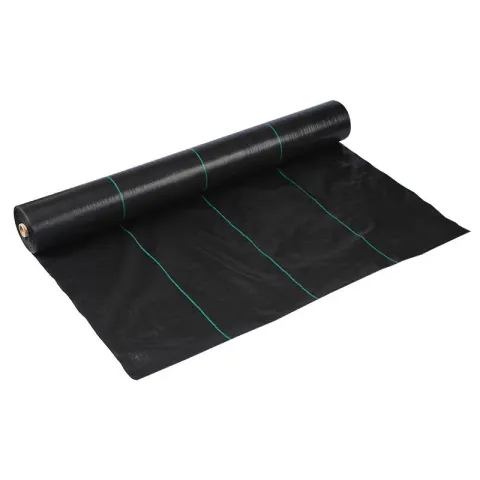
PP woven membrane PE ground cover mesh weed mat roll anti grass weed control cloth blocker mulch film
$ 0.1
/Square Meter
MOQ: 5000Square Meter
Product Model:
Supplier Profile
SHOUGUANG ZEHUI AGRICULTURAL SCIENCE AND TECHNOLOGY CO.,LTD
Established: April 3, 2015
Company Size: 50
Get Best Price
4.Application and Usage Methods
4.1 Installation and Laying Techniques
4.1a Manual Installation
-
Usage Rate: 25-35% of global mulch films installed manually
-
Labor Requirement: 0.4-0.8 person-days/hectare
-
Application scenarios: Small farms, irregular plots, developing countries
-
Fixation Methods: Soil pressing edges, plastic pins(2-4 per square meter)
-
Edge Burial Depth: 10-15cm to ensure stability
4.1b Mechanized Installation
-
Equipment types: single-row (1.0-1.2m), multi-row (up to 4 rows simultaneously)
-
Working efficiency: 0.5-2.0 hectares/hour
-
Tension Efficiency: 0.5-2.0 Hectares/hour
-
Fixation systems: simultaneous trenching and soil covering, compacting edges
-
Advanced Features: synchronous drip tape installation, mulch perforation
4.1c Special Installation Methods
-
Double-layer installation: Tunnel effect, air insulation between 2 layers
-
Ridge + Furrow Coverage: comprehensive weed control, improved moisture utilization
-
Solarization installation: Tight soil contact, sealed edges
-
Floating Cover Method: slightly suspended over crops, frost protection
-
Dome installation: support-assisted, increases volume space
4.2 Installation Performance Factors
4.2a Soil Preparation requirements
-
Optimal soil moisture: 50-75% of field capacity
-
Surface preparation: clod size
-
Bed formation: 10-20cm height, 3-5% crown for drainage
-
Pre-installation treatments:
-
Base fertilization: complete before mulching
-
Residue removal:
-
Soil firming: light rolling recommended
-
Irrigation systems: install drip tape simultaneously with mulch
4.2b Weather Condition Impacts
-
Wind limitations:
-
Temperature range: 10-30°C optimal (film becomes brittle 35°C)
-
Humidity effects: 40-70% relative humidity optimal
-
Rainfall Considerations:
-
Pre-installation: allow 24-48 hours after heavy rain
-
Post-installation: increased puncture risk within 48 hours
-
-
Seasonal timing: install 1-2 weeks before planting in cold regions
4.2c Machinery and Equipment performance
-
-
-
Tractor requirements
-
Power: 25-45 HP for single-row, 60-90 HP for multi-row
-
Speed: 3-6 km/h optimal operation rate
-
Hydraulic capabilities: minimum 2 sets of remotes
-
-
-
-
Installation quality metrics
-
Edge burial: 90-95% continuous coverage
-
Tension uniformity:
-
Surface contact: > 90% soil-to-film contact
-
Stretching ratio: 102-105% of original width
-
Laying precision
-
Row alignment tolerance: ±2-3cm
-
Film Centering: ±5cm from bed center
-
5.Upstream-Downstream Industry Relationships
5.1 Upstream Raw Material Supply Chain
5.1a Polymer Resin Supply
-
Agricultural Mulch PE Consumption: Approximately 3.4-4.0 million tons/year globally
-
Resin Price Fluctuations: Strongly correlated with crude oil, 20-40% annual variation
-
Regional Differences: Middle East Lowest cost, Asia largest capacity
-
Bio-based PE Premium: 30-70% higher than conventional PE
-
Key Suppliers: ExxonMobil, SABIC, Total, Sinopec, Dow
5.1b Additive Supply Chain
-
Mulch Film Specific additives market: $450-550 million
-
Additive Cost Proportion: 5-15% of total cost(depending on functionality)
-
Innovation Driven: 80% of performance improvements come from additive technology
-
Key Suppliers: BASF, Clariant, Addivant, Songwon, Ampace
-
Regional Characteristics: Europe High-performance, Asia low-cost, Americas balanced.
5.2 Downstream Industry Connections
5.2a Mulch Film Distribution Channels
-
Agricultural cooperatives: 25-35% market share
-
Agricultural input retailers: 30-40% market share
-
Direct manufacturer sales: 10-15% (large farms)
-
Online platforms: 5-10% (rapidly growing)
-
Government programs: 5-15% (especially in developing markets)
-
Channel margins:
-
Wholesale: 8-12%
-
Retail: 15-25%
-
Specialized products: 25-40%
-
5.2b Integration with other agricultural systems
-
Irrigation system integration
-
Drip irrigation: 70-80% of mulched area uses drip
-
Compatibility issues: special fittings requred for perforation
-
-
Fertilizer system synergies:
-
Fertigation compatibility: enhanced nutrient efficiency 20-30%
-
Controlled-release fertilizers: 15-25% improved efficiency under mulch
-
Reduced leaching: 30-50% less nitrogen loss
-
-
Crop protection integration
-
Reduced herbicide usage: 60-80% reduction
-
Altered fungicide programs: lower disease pressure, 20-40% reduction
-
Integrated pest management: specialized for mulched conditions
-
5.2c Recycling and waste management industry
-
Collection Infrastructure:
-
Specialized agricultural plastic collectors: operating in 30+ countries
-
Collection rate: 15-55% depending on region(Europe highest)
-
Cost of collection:$80-150/ton
-
-
Recycling technologies:
-
Conventional mechanical recycling: requires
-
Advanced washing systems: can process material with 15-25% soil
-
Chemical recycling: emerging for heavily contaminated films
-
Recycled content applications:
-
Agricultural products: irrigation pipes, plant pots, non-food contact films
-
Construction products: lumber alternatives, outdoor furniture
-
Industrial applications: packaging, automotive components
-
-
Circular economy initiatives:
-
Manufacturer take-back programs: increasing by 25-30% annually
-
Recycled content goals: 20-30% by 2025(industry average)
-
Advanced tracking: RFID and blockchain verification systems
-
-
More Sourcing News
77667
July 4, 2025
73940
July 10, 2025
71854
July 10, 2025
64675
July 4, 2025
61906
July 10, 2025