
Water Soluble Fertilizer
6220
June 23, 2025, 10:41 AM
Guide
Highlights at a glance
This article provides a comprehensive overview of water-soluble fertilizers, classifying them into straight, complex, and micronutrient types based on composition and function. It details key nitrogen, phosphorus, and potassium sources, highlighting their chemical formulas, nutrient content, and solubility. Complex NPK blends are categorized by nutrient ratios for specific growth stages, while specialty formulations address calcium, magnesium, and micronutrient needs. Chelated and sulfate forms of micronutrients are compared for stability and uptake efficiency. The article also examines critical physical and chemical properties, including solubility, pH, electrical conductivity, and osmotic pressure, which influence fertigation performance. Various physical forms—powder, granular, prilled, liquid, and tablet—are described in terms of handling and application. Finally, quality standards cover solubility, purity, particle characteristics, and storage stability, ensuring product efficacy and safety for precision agriculture.
1.Classification and Chemical Properties
1.1 Primary Categories of Water-Soluble Fertilizers
1.1.1 Straight Water-Soluble Fertilizers
-
Nitrogen Sources:
-
Urea (46-0-0): CO(NH₂)₂ - 2200 g/L solubility at 20°C
-
Ammonium Nitrate (34-0-0): NH₄NO₃ - 1900 g/L solubility at 20°C
-
Calcium Ammonium Nitrate (27-0-0): CAN - 1500 g/L solubility at 20°C
-
Ammonium Sulfate (21-0-0): (NH₄)₂SO₄ - 700 g/L solubility at 20°C
-
-
Phosphorus Sources:
-
Monopotassium Phosphate (0-52-34): KH₂PO₄ - 225 g/L solubility at 20°C
-
Monoammonium Phosphate (12-61-0): NH₄H₂PO₄ - 365 g/L solubility at 20°C
-
Diammonium Phosphate (18-46-0): (NH₄)₂HPO₄ - 575 g/L solubility at 20°C
-
Phosphoric Acid (0-85-0): H₃PO₄ - Completely miscible with water
-
-
Potassium Sources:
-
Potassium Nitrate (13-0-46): KNO₃ - 316 g/L solubility at 20°C
-
Potassium Sulfate (0-0-50): K₂SO₄ - 120 g/L solubility at 20°C
-
Potassium Chloride (0-0-60): KCl - 344 g/L solubility at 20°C
-
Monopotassium Phosphate (0-52-34): KH₂PO₄ - dual nutrient source
-
1.1.2 Complex Water-Soluble Fertilizers
-
NPK Water-Soluble Blends:
-
High Nitrogen: 20-20-20, 30-10-10, 25-5-5
-
Balanced: 20-20-20, 15-15-15, 19-19-19
-
High Phosphorus: 10-52-10, 13-40-13 (starter formulations)
-
High Potassium: 15-5-30, 12-12-36 (fruit/flower development)
-
-
Specialty Complex Fertilizers:
-
Calcium Nitrate Based: 15.5-0-0 + 19% Ca
-
Magnesium Enhanced: NPK + Mg formulations
-
Micronutrient Enriched: NPK + chelated micronutrients
-
pH Adjusted: Buffered formulations for specific pH ranges
-
1.1.3 Micronutrient Water-Soluble Fertilizers
-
Chelated Micronutrients:
-
EDTA Chelates: Iron, manganese, zinc, copper chelates
-
DTPA Chelates: More stable in alkaline conditions
-
EDDHA Chelates: Iron-specific, highly stable
-
Amino Acid Chelates: Organic chelation for enhanced uptake
-
-
Sulfate Forms:
-
Iron Sulfate: FeSO₄·7H₂O - 200 g/L solubility
-
Manganese Sulfate: MnSO₄·H₂O - 700 g/L solubility
-
Zinc Sulfate: ZnSO₄·7H₂O - 965 g/L solubility
-
Copper Sulfate: CuSO₄·5H₂O - 203 g/L solubility
-
1.2 Physical and Chemical Properties
1.2.1 Solubility Characteristics
-
Complete Solubility: 100% dissolution in water within specified time
-
Clear Solutions: No residue or precipitate formation
-
Dissolution Rate: Fast dissolution (typically
-
Temperature Dependency: Solubility increases with water temperature
-
Concentration Limits: Maximum solution concentration without precipitation
1.2.2 Solution Properties
-
Electrical Conductivity (EC):
-
Ranges from 0.5-3.0 mS/cm depending on concentration
-
Critical parameter for fertigation system management
-
Plant tolerance varies by species and growth stage
-
-
pH Characteristics:
-
Acidic: Ammonium-based fertilizers (pH 4.0-5.5)
-
Near Neutral: Nitrate-based fertilizers (pH 6.0-7.5)
-
Alkaline: Some potassium sources (pH 7.5-8.5)
-
-
Osmotic Pressure:
-
Higher concentrations increase osmotic pressure
-
Can affect plant water uptake if excessive
-
Requires careful concentration management
-
1.2.3 Physical Forms and Characteristics
-
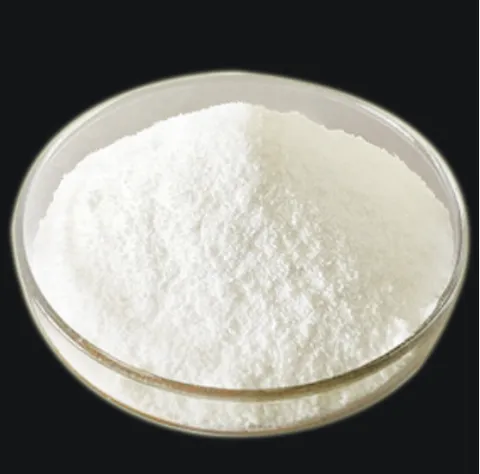
Crystalline Powder: Fine crystals, rapid dissolution, dusty
-
Granular: 1-4 mm particles, reduced dust, easier handling
-
Prilled: Spherical particles, uniform size, good flow properties
-
Liquid Concentrates: Pre-dissolved solutions, ready-to-use or dilutable
-
Soluble Tablets: Compressed forms for small-scale applications
1.3 Quality Standards and Specifications
-
Solubility Requirements:
-
Complete dissolution within specified time frame
-
No visible residue in standard test solutions
-
Stability of solution over storage period
-
-
Purity Standards:
-
Minimum nutrient content guarantees
-
Maximum impurity levels (heavy metals, chlorides)
-
Micronutrient specifications and chelation stability
-
-
Physical Properties:
-
Particle size distribution
-
Bulk density and flowability
-
Moisture content and storage stability
-
Caking resistance and dust content
-
More Sourcing News
77806
July 4, 2025
74050
July 10, 2025
71990
July 10, 2025
64785
July 4, 2025
62052
July 10, 2025